In January the Council of Europe voted through a ban on Conversion Practices
Anti-trans groups love Conversion practices. They have heavily lobbied against bans that cover trans people. They have tried to claim that trans support or affirmative medical care is a conversive practice. They have tried to water down the definition of conversion practices to emphasise only the most physically violent acts. They have tried to bulk up exceptions, based on religious freedoms. They have tried to bulk up exceptions, based on parental rights. They have tried to bulk up exceptions, under the banner of ‘legitimate medical practice’ or ‘legitimate psychological exploration’.
When discussing conversion practices, a lot of the focus is on the idea of a sweeping legislative ban and the details of what is or isn’t criminalised.
In a short blog I want to focus on three aspects of a ban on conversion practices. Here I will focus on:
- Part 1: Conversion practices that are designated a CRIME
- Part 2: Conversion practices that are widely understood as a BAD PRATICE
- Part 3: Removing conversion practices from public HEALTHCARE
I see these as three distinct strands, and it is important to do more that just focus on the first one.
Part one: Conversion practices that are a CRIME
Legislation against conversion practices can be understood as legislation that makes certain practices illegal. It could open up a process for prosecution of abusive practices. It could be legislation used to investigate harmful practice, especially by private practitioners, religious practitioners, parents, where the harm is really huge.
Anti-trans campaigners are working very actively to water down the legislation, to create exceptions, to reduce the chances of conversive practices being deemed a crime.
Effort to tighten the legislation is needed, and I’m sure some folks will focus on that area. For myself, I am perhaps less inspired by the idea of criminalisation as a tool for justice for trans kids – the barriers to actually getting to court are so high, the support is so low. If the more extreme proponents can be actually made to stop practicing under this legislation, that would of course be valuable. I fear that those who are most active will be adept in using the right language to evade a ban, to deny their work is conversive, to exploit the loopholes that have been put into law.
The laws at present have so many loopholes, especially when working in a cisnormative society, that I don’t expect conversion therapy AS A CRIME will hugely protect trans children any time soon.
Part two: Conversion practices that are widely understood as a BAD PRATICE
I am more interested in these bans on conversion practices as a societal indicator of what is understood to be BAD PRACTICE.
I am very interested in the ways in which a Conversion Therapy Ban signals to the general society what is and is not acceptable practice.
With this as a goal, I am less interested in the legislation as an enforceable act for punishment and prosecution of CRIME, and more in the legislation as a route to culture change, of signalling across society what is ACCEPTABLE PRACTICE.
I would prefer to see a really broad legislation that conveys clearly a cultural message – “trans identities are fine and non-pathological” – “efforts to change, repress or suppress trans identities are harmful”. I would feel even better about the legislation if it also mirrored the words of the UN expert of SOGI who explicitly stated that ‘efforts to delay or deny transition’ are a conversive practice.
I’d also love to have recognition, within any work on conversion practices, of a reality that modern conversive practices, especially in psychology or healthcare, know enough to avoid describing themselves as ‘seeking’ to change or suppress identity. They often don’t even think of their work in these terms themselves – instead rejecting the existence of trans identities or presuming that a trans identity is a false misunderstanding. They usually work by compelling or coercing trans people to ‘explore’ their identity, in a manner that is never pushed onto cis people. Conversive practices in psychology or healthcare are less defined by ‘I will do X, Y or Z to make you cis’, and more by ‘we won’t just accept and support your trans identity, we need to first make you do X, Y or Z’.
Within legislation banning conversive practices, broad statements of the practices that are illegal are valuable not only for defining who can be prosecuted for committing a crime. They are equally powerful in setting a clear statement across our societies, that conversion practices are wrong, harmful, and should be avoided.
Part three: Removing conversion practices from public HEALTHCARE
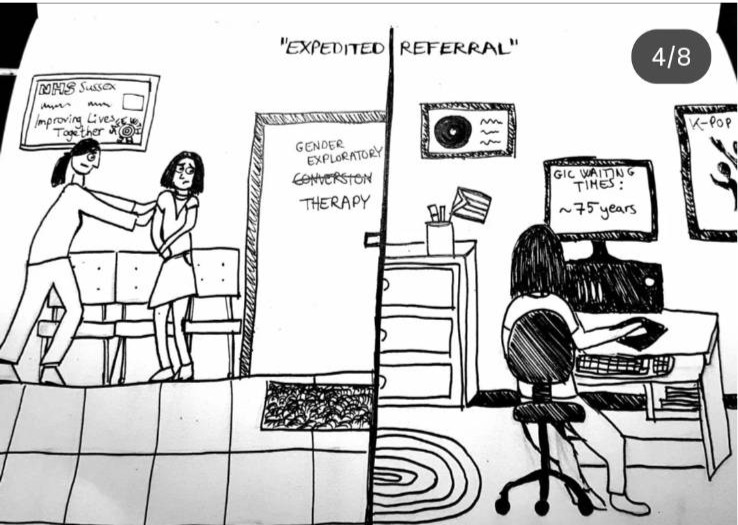
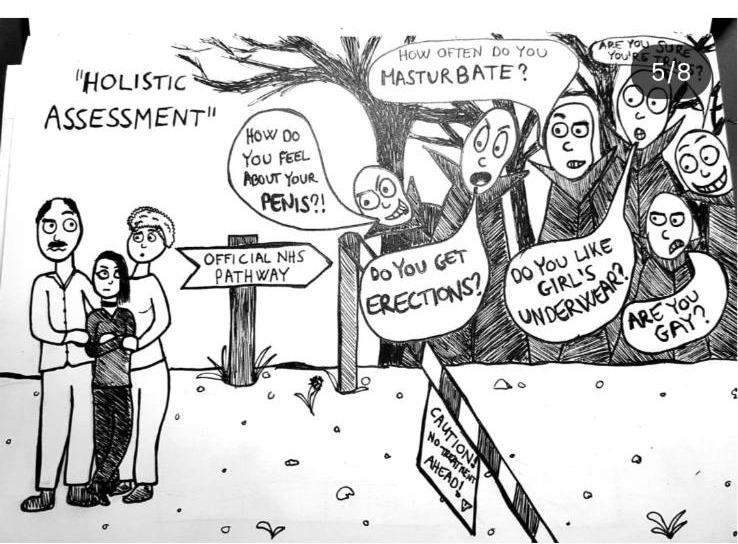
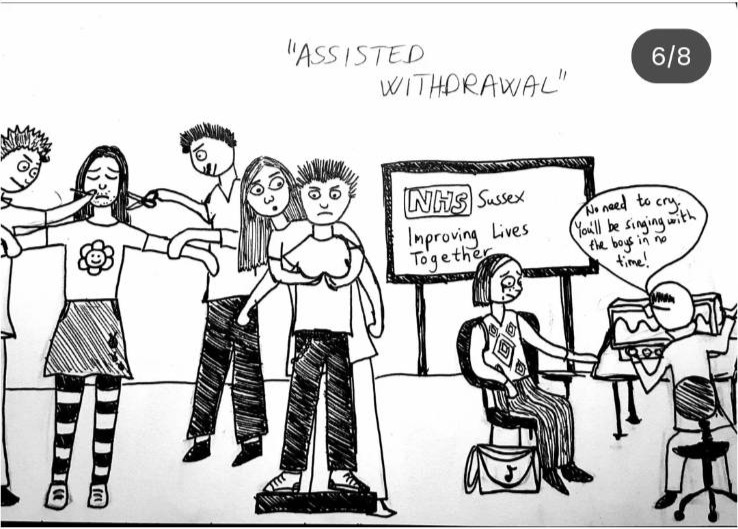
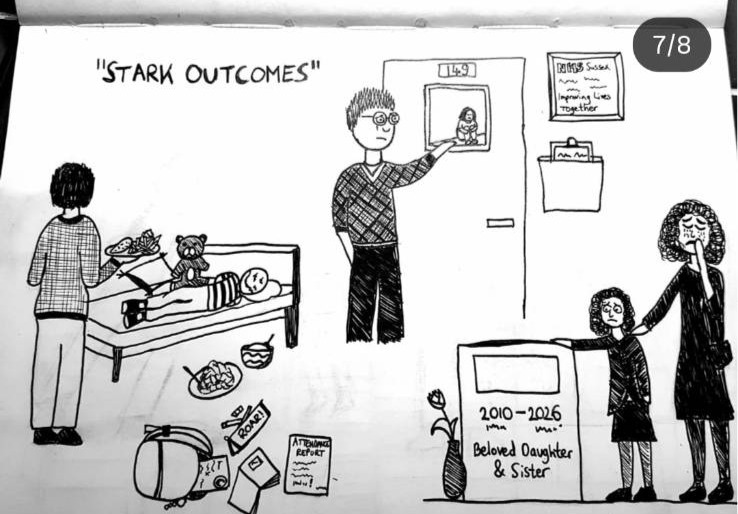
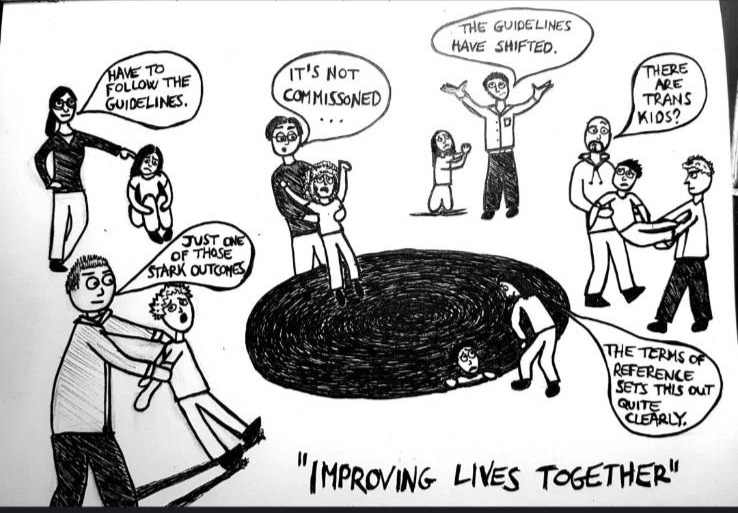
In the UK we have a peculiar situation, of a Government claiming to want a conversion therapy ban, while the same UK Government has put in place an NHS healthcare service that is actively conversive for under 18s.
When we consider the conversion practices that are an intentional part of our public services, especially in the NHS, we need to take a different approach, and not centre our hopes and our advocacy in a legislative ban.
I don’t think we are ever going to be in a world where our UK Government will bring into law a ban on Conversion Practices, and start by prosecuting itself for its NHS trans children’s healthcare service. This is not a realistic hope for conversion therapy legislation.
What we can try to do includes the following:
- Advocate in spaces like in Europe, that Governments currently practicing conversion practices in their public healthcare systems should not be at the table in writing conversion therapy legislation. If they are given any such seat, they will obviously re-write the legislation to exclude their own practices.
- Argue strongly that a government cannot bring on to paper legislation against conversion practices, whilst practicing conversion practices in its own healthcare system.
Any ‘conversion therapy ban’ in the UK at this time of State level conversion efforts, would be an absolute joke and mockery. I would strongly argue against the imposition of a ban that runs alongside widespread NHS conversion.
There are some folks who clearly think we can bring in a legislative ban first, and then try to use that ban to argue that our NHS healthcare is conversive. This seems a doomed strategy.
While we have any momentum moving towards a ban on conversion therapy, we should argue that such a ban CANNOT be put into practice whilst giving an exception to the conversion practices in our own NHS. The conversation around wanting a ban, can be used as a tool to pressure the Government and NHS to recognise their own roles in conversion practices.
As stated before, the primary purpose of a ban is not in creating a new CRIME for a tiny minority to be prosecuted under (where many of the more easily prosecutable actions could perhaps be prosecuted under other legislation eg actual bodily harm anyway). The purpose of a ban is in shaping societal understanding of what is ACCEPTABLE PRACTICE.
A ban that comes into place whilst allowing current NHS practices is doing exactly the opposite. It is saying that trans conversion practices actually aren’t a problem, if they come with a white coat – if they come with an NHS rainbow badge.
For me, we should advocate for a ban on conversion practices. We should raise our voices. Create pressure in public and politics.
But this advocacy is primarily to shape public opinion, to shape individual practice and to shape institutional practice.
We cannot ignore the HUGE ELEPHANT in the room of our NHS enforcing conversive practices.
We can advocate for a ban on conversion practices WHILST also stating that any such ban is completely impossible and meaningless until the time when we have removed conversion practices from our national policy.
I don’t see a Government written statutory ban on conversion practices as a tool to remove those practices from our Government designed NHS.
WHO IS CONDUCTING CONVERSION PRACTICES?
For those people who are advocating for the introduction of a ban on conversion practices right now in the UK, whilst the NHS is practicing them – I would like to ask the question: Do you really see a ban on conversion practices as being a tool to change NHS practice? Or is it more that you don’t really care about trans kids.
For me, there are five areas of conversion practices that I am most concerned about, that I see most often here in the UK:
1: Our NHS children’s gender clinics, in ways that align with UK Government policy.
2: Other NHS healthcare professionals who are practicing overt conversion practices, in ways that align with UK Government policy.
3: Parents, conducting conversion practices on their own children, many of whom are acting in ways that align with UK Government policy.
4: UK Schools, conducting conversive practices on children in their care, in ways that align with UK Government policy.
5: Private therapists, conducting very explicitly conversive therapy.
Of these, the only ones who could potentially be impeded by prosecution a conversion therapy ban are number 5 – the private therapists. But these people, who are very committed to conversion therapy – are also very aware of the exceptions and loopholes in the law. They will utilise the loopholes that are being written to protect NHS approaches, they will adapt their own language, they will try to evade prosecution – and they will likely succeed. A law that provides exceptions for ‘legitimate therapy’ will be utilised by private conversion practitioners, especially when they only need to argue that their practice is not so different from (abusive) NHS practice.
Parents will be unlikely to be prosecuted anyway, unless they’ve done something really physically abusive that could have been prosecuted under other child protection laws. Exceptions for current NHS practice create a huge scope for justifying conversive parental practice.
Any legislative ban brought in in the UK right now will not protect the majority of trans kids impacted by conversion practices.
And any legislation written on paper, that is deemed compatible with current UK Government conversive policy, in healthcare and schools, has zero value in shifting the societal understanding of what is and is not ACCEPTABLE PRACTICE.
We should keep talking about conversion practices. How they are harmful.
We should keep pressing for a legislative ban.
We NEED to also continue to push attention to a reality – we cannot have a meaningful ban on conversion practices, whilst it remains Government policy. For more on conversive practices in the NHS, see my recent peer reviewed article:
Those advocating for a (much needed) ban, have a responsibility to put as much energy into calling attention to UK Government policy – they cannot push this elephant to the sidelines.
I’m pleased to see the current resolution from the Council of Europe. I think it remains a useful indicator of what is ACCEPTABLE PRACTICE, even while lobbying from the Evangelical Alliance and Sex Matters have tried to dilute its protections.

 Growing Up Transgender