Harming trans kids – Using art to capture the impacts of the Sussex ICB investigation

When puberty blockers were banned in June 2024, the legislation included a clause stating that those currently on blockers would not be medically detransitioned, and could continue care if adopted by an NHS GP.

Only one NHS GP practice, WellBN in Brighton, agreed to take over this care, with trans adolescents and families from across Great Britain moving to their care. Patients have reported extremely high rates of satisfaction with this care.

In May 2025 ICB Sussex (ICB = Integrated Care Board, the level of bureaucracy above a GP practice and below NHS England) and NHS England launched an investigation into this care. The investigation has already caused a high level of harm to trans adolescents and families. Essential care is under threat of being taken away, with a threat of forced medical detransition. One person (I can’t share their identity) put this situation into a series of illustrations, capturing powerfully the current situation. This has been shared on instagram, but for those who don’t use it, they gave me permission to share here. I’ve added a bit of extra context.

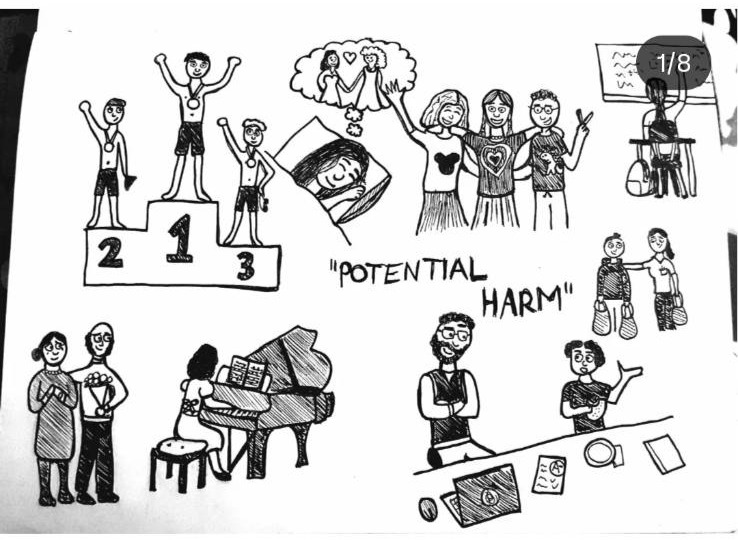
Image one captures the ICB’s allegation of trans adolescents having been exposed to ‘potential harm’. What we instead have seen, is young people thriving and excelling through access to respectful affirmative healthcare.

[Description of image 1 “Potential Harm”: One trans young person is winning at sports; One is dreaming of a happy future relationship and marriage; one is hanging out with friends; one is doing their school work; one is playing the piano while proud parents watch; one is going shopping with a parent – while professionals write up reports of potential harm]

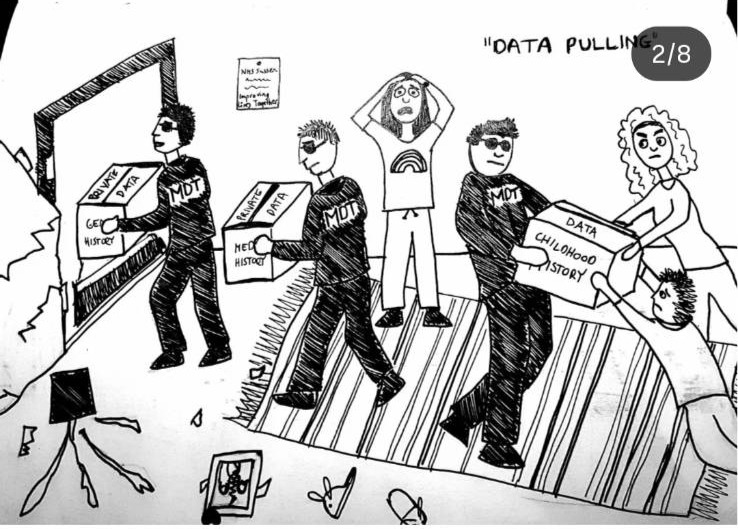
Image two captures the NHS’s approach to data collection. GP practice patients refused consent for the ICB taking their private patient data. GP practice patients, adolescents and parents, added notes to their files formally refusing permission to share their data. The GP practice did not want to share this data, and refused for several months. The GP offered anonymised data – the ICB was not interested in anonymised data. The ICB and NHS England stated that consent was not necessary due to ‘patient safety concerns’ despite no evidence of harm. The ICB finally threatened to cancel WellBN’s whole NHS contract, closing down a GP surgery with 25,000 patients, if they didn’t hand over patient data. WellBN at this point folded and handed over all trans children’s data. Information commissioner office complaints have been submitted.

[Description of image 2 “Data Pulling”: A house is being trashed with objects broken. Men in black suits (with the words Multi-disciplinary team on their top) are forcibly removing boxes of data, while adolescents and families try to keep hold of them. The boxes are labelled ‘private data’, ‘gender history’, ‘medical history’, ‘childhood history’.]

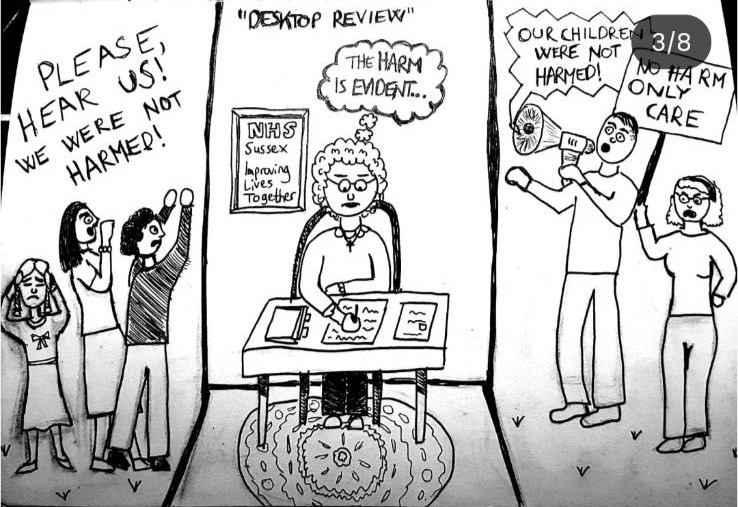
The third image covers the evaluation of patient harm. A patient harm investigation is being conducted without speaking to a single trans adolescent or family. It is being conducted purely based on clinical notes. The conclusion has been pre-determined with the investigation clearly considering affirmative care inherently a form of harm. Trans adolescents and families have prepared testimony on the reality that not only has there been no harm, their care has been excellent. Trans adolescent and family voices are not being heard.

[Description of image 3 “Desktop Review”: Adolescents and families are shut outside, using loud speakers to say ‘Please hear us, we were not harmed’; ‘children not harmed’, ‘no harm only care’. Inside, behind thick walls sits the head of the investigation team doing a ‘desktop review’ writing ‘harm is evident’.]

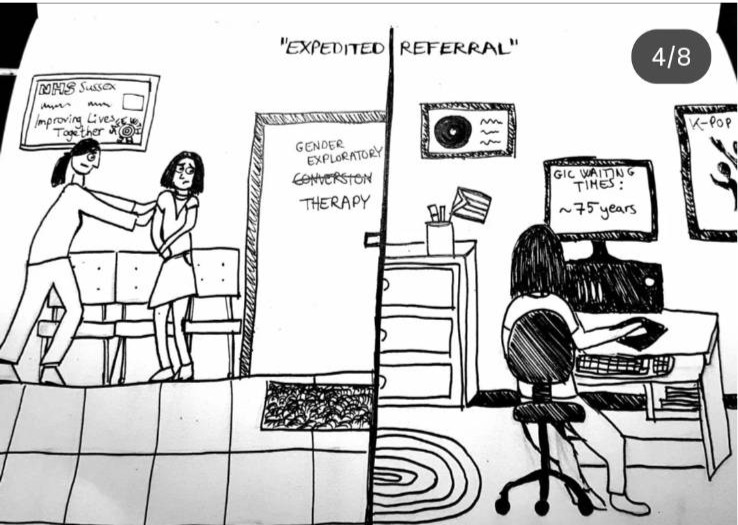
The fourth image focuses on the ICB’s plan to close all WellBN Care and refer patients elsewhere. Trans youth who are under 17 are to be forced to into gender clinics that offer conversive talk therapies focusing on investigating trans identities. 17 year olds will join waiting lists for adult care that stretch into years and years long.

[Description of image 4 “Expedited Referral”: A scared young person is being pushed into a room. The room was labelled ‘conversion therapy’. The word conversion has been crossed out, and in its place the words ‘gender exploratory’ therapy are now scrawled. In another scene a slightly older adolescent sits at a computer where the screen states ‘Gender Identity Clinic waiting times: 75 years].

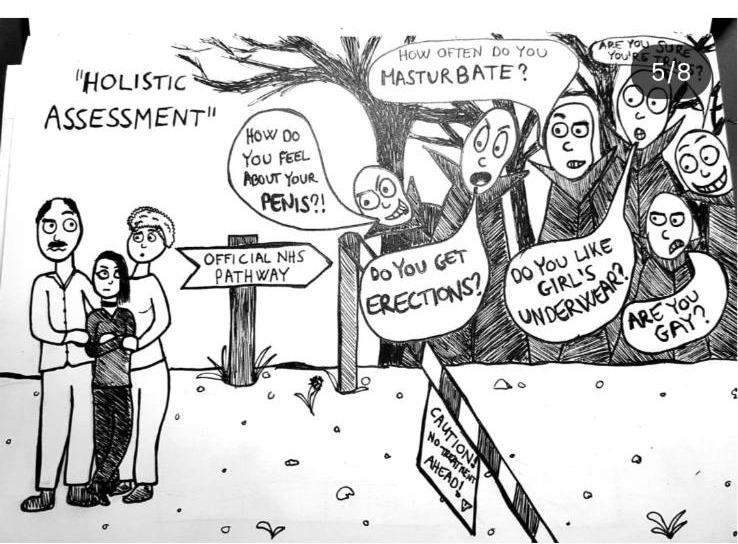
Image 5 covers the preferred NHS approach for trans youth, gender clinics that focus on invasive, traumatic and inappropriate questioning of trans youth.

[Description of image 5 “Holistic Assessment”: Worried looking parents embrace a worried looking adolescent on one side. Ahead of them is a barrier labelled ‘caution no treatment ahead’. Behind the barriers are six faces with word bubbles ‘how do you feel about your penis?’; ‘do you get erections?’; ‘how often do you masturbate?’; ‘Are you sure you’re trans’?’; ‘Do you like girls’ underwear?’; ‘are you gay?’].

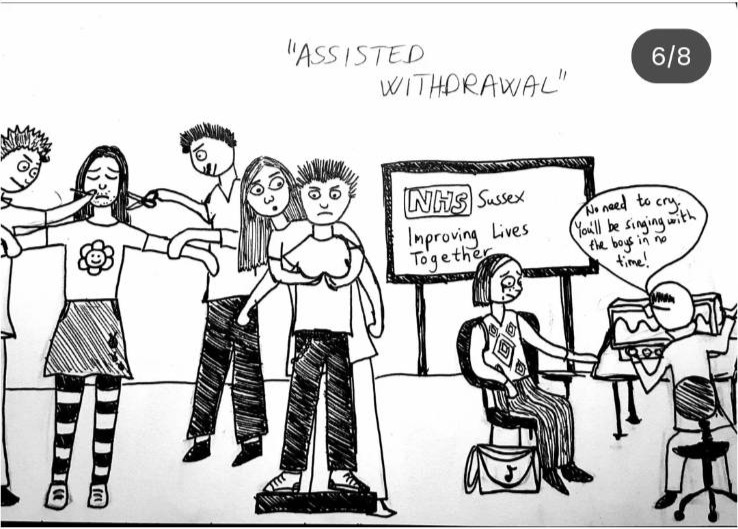
Image 6 focuses on the ICB’s intention for ‘assisted withdrawal’ of affirmative healthcare. This is forced medical detransition. It is abusive and harmful.

[Description of image 6 “Assisted Withdrawal”: A trans girl is having her long hair cut and facial hair painted onto her face; a trans boy is having breasts added; a young girl musician is crying while a professional says ‘don’t worry you’ll be singing with the boys in no time’]

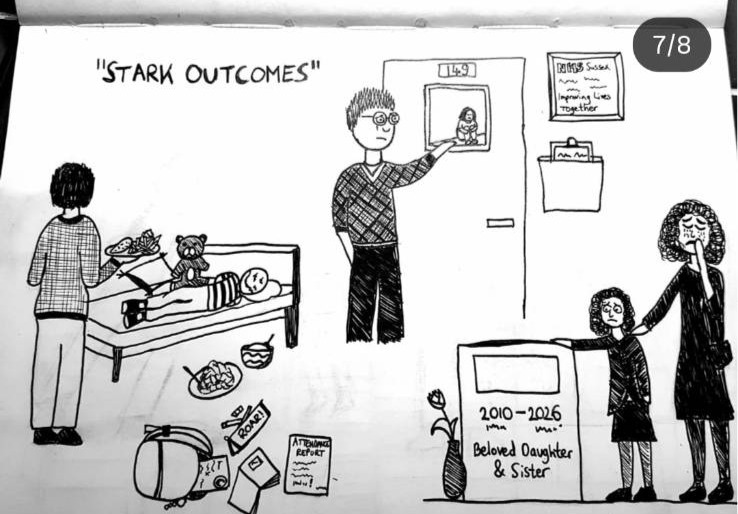
The ICB have stated that they expect the outcomes to be ‘stark’ for impacted trans youth ‘especially the younger ones’. This image powerfully captures the type of stark outcomes that the ICB is well aware of as possibilities, having included these risks in their own risk assessment.

[Description of image 7 “Stark Consequences”: The image shows various depictions of children and adolescents having serious mental health consequences, including school drop out, stopping eating, mental health crisis and death]

The eighth image captures the ICB and NHS England’s intended ‘robust tracking approach’. Now that they have full patient data on adolescent and supportive families, they intend to ‘robustly’ track these children and families, keeping their data for 20 years, and tracking what adolescents and families do next. They have stated that if they think families and adolescent will continue to access medication through private means, they will be reported by the ICB to social services. Families and adolescents feel extremely threatened, extremely unsafe. Many are trying to find ways to flee the country.

[Description of image 8 “Robust Tracking Approach”: A scary large figure with a magnifying glass stares down at a scared looking child, while parents try to pull the child away to somewhere safer]

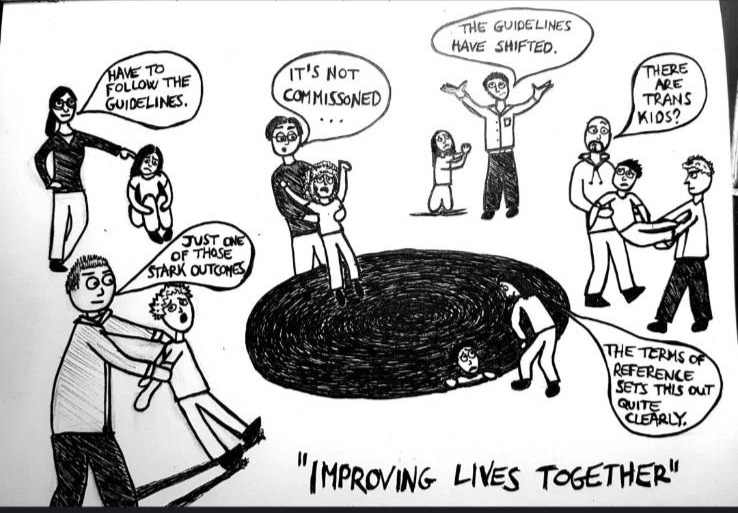
The final image shows scared young people being pushed into a black hole.

[Description of image 9 “Improving Lives Together”: Scared young people, some of whom are crying are being pushed into a black hole. The adults pushing them in are saying statements like “just one of those stark outcomes”; “have to follow the guidelines”; “It’s not commissioned”; “the guidelines have shifted”; “there are trans kids?”; “the terms of reference sets this out quite clearly”.

Across all of the above images the artist has included ICB Sussex’s tagline ‘Improving Lives Together’.

Trans health waiting lists are a political choice

I’m just back from an awesome trans healthcare conference in Norway (blog on that to follow). Here I wanted to share information from a presentation by the founder of the transit trans healthcare service in Catalonia (Barcelona region), Spain. Transit is respected across the world for being a service that is leading the field in informed consent depathologised healthcare. Here I will share information on the approach, the history, how it works today and reflections on trans health waiting lists. First a quick spoiler for why you should read on: their waiting list for new referrals is 3 weeks.


The approach
The transit service was set up with a strongly trans affirming philosophy of care, building from principles including 1) a firm commitment to depathplogisation, that trans people have a right to affirmative healthcare without being under psychological or psychiatric control and without requirement for psychological assessment or diagnosis.2) commitment to Informed consent,that trans people of all ages have a right make their own decisions about their own healthcare 3) commitment to avoid diagnosis, recognising that a doctor or psychologist can never know someone’s gender identity.


The history
The transit service ran from 2012-2016 as a service running outside of state management and state funding. It ran in parallel to a state run gender clinic that was pathologising and gatekeeping. Transit was very popular amongst trans communities. The state run gatekeeper service was widely disliked. Three things happened. One, trans communities across the state united behind one clear demand and goal, to demand the closure of the state run gatekeeper service and the transfer of funding to the popular informed consent service. Two, communities organised and did activism growing support and unity behind their goal. Three, they managed to gain the support of a state politician who had the authority in a devolved spanish system to make a change. In 2016 state funding was shifted to the transit informed consent service and the gatekeeping psychology and psychiatry dominated service closed.


How it works today
Trans people always have a first appointment with a medical doctor able to prescribe hormones and never have a first appointment with a psychologist, psychiatrist or psychoanalyst. Fifty percent of patients receive hormones on that first appointment. The waiting list for the service is three weeks, meaning half of patients wait three weeks from referral to hrt.

The service does not deny hrt at first appointment for those who ask for it. For those who come to the appointment asking for hrt, they are usually well informed about her, and hrt discussions take up a very small part of the appointment, instead defining the appointment as a safe space where they can talk about any parts of their life that are difficult, with this discussion having no impact on them getting hrt which is guaranteed as it is their decision to make.  The reason people do not take hrt at first appointment is that they have not yet decided what they want and the patient themselves asks for more time, more support or other support.

The first appointment is 45 mins to one hour. There are zero required questions and no assessment of diagnosis. Doctors state that their job is not to assess or diagnose but to support their patient take decisions. The service operates what it describes as a multidisciplinary team but this means something completely different to what this term means in NHS children’s services. In transit it means that in addition to the medical doctor who takes the first appointment there are other professionals who the patient can request to see for additional support. A patient can ask to see a therapist to talk through their worries, history or mental health. A younger patient can ask to see a family support worker to get advice on getting support at school. They can choose to see a voice therapist. All of these additional professionals are offered and not required. The MDT offers value to service users,and does not operate as an abusive multi professional assessment, approval and gatekeeping gauntlet as happens in the UK. This same informed consent approach is followed for under 18s, with parents and legal guardians also involved in decision making for under 16s.

The transit service, with its three week waiting list, covers a population of 8 million, equivalent to the population of Scotland and Wales combined, or one seventh of the population of England, like one of our major regions. It has a total of 43 staff, a majority of whom are very part-time, working 6-7 hours per week for the transit service and working in other areas of healthcare the rest of the week. It has very high patient satisfaction rates. The key areas of complaint the service receives relates to the unavailability of particular formulations like injectable oestrogen, and complaints from parents who would prefer their child had gatekeeping in a slow psychological assessment and diagnosis model. The service has health provision in 8 locations across Catalonia, meaning people don’t have to travel far for an appointment.


Waiting
Last week UK trans healthcare advocates and journalists produced important work on the waiting lists for UK services. Those numbers are appalling. Whilst critiquing these ridiculous waiting lists I also hope we can do three other things:

1) Recognise the political and institutional choices that cause this waiting list: The NHS and our government choose to demand a gatekeeping psychology-led service that is the number one cause of our harmful waiting list. This is about the model of care, not about the amount of funding. In children’s care an increase in funding has led to an increase in the resources allocated to gatekeeping, not to any improvement in access to care. We should be long past arguing that increased funding is an form of solution without systemic reform

2) Recognise how easy it is to make better choices. Harmful gatekeeping services can be closed down and defunded. Respectful informed consent services can be funded and quickly expanded, delivering improved care at a smaller price. Importantly, a demand for informed consent care can and should be made for trans people of all ages, including trans children and adolescents. We need to stand together.

3. Recognise that the way in which we measure our waiting list matters. I hope we can move away from centring the metrics that our NHS and government think matter, and focus more on the metrics that actually matter. I would argue, that the key metric we should be counting, is a metric of the minimum expected time from referral to first getting a prescription for endocrine care, broken down by different characteristics including age and neurodivergence. Measuring a waiting list for access to a first appointment is entirely without merit in a service where the gap between first appointment and endocrine care is measured in years.

The UK children’s service has long had a waiting list of over 6 years for a first appointment. That statistic is likely to reduce. Trans under 18s are being forcibly discharged from the service for not attending identity exploration sessions, trans young people and families are ‘choosing’ to ask to be deregistered from a service that they find harmful and know won’t help them, trans young people and families are deregistering from the waiting list, and reforms to the referral system have made it increasingly impossible to get a new referral. But if that waiting list for the service goes down, does that matter? When those are the end of that wait have to wait for many year more, perhaps until they are 18 (or 25…) for approval for endocrine care.

For adults there has long been a minimum 1+ year delay from the end of the waiting list to getting endocrine care. That is part of the waiting. For many that wait is far longer than one year, and some people go years or never receive NHS approval for endocrine care. We need to focus less on the wait for a first appointment and more on the wait for endocrine care. This data could be collected, by the NHS or by ourselves.

Questions could be asked at the point of a first prescription including:
1. How long did you wait between referral and getting this prescription ?
2. How much of that wait was spent doing things that you found beneficial (counselling you chose to pursue before hormones, time for thinking, time for working through other issues including housing , employment and social transition that you chose to pursue before hormones, time to work through other mental health issues you chose to pursue before endocrine care, time to understand medical transition options). This can be defined as acceptable and patient-centred waiting for healthcare.
3. How much of that wait was not beneficial or harmful to you? (This can be defined as unacceptable waiting for care). Unacceptable and unwanted waiting for essential healthcare is a systemic inequality. Where this this number is counted in months or years rather than weeks, it is a form of state violence against trans people.

Huge waiting times for trans healthcare in the NHS, both in children’s and adult services, are there by design. Better political and institutional decisions in locations like Spain have removed this waiting list, delivering far better outcomes at a fraction of the cost. We demand better from our national healthcare.

Why I won’t be engaging with the UK’s puberty blocker study

Funding for the long awaited study on puberty blockers was announced this week, with £10 million pounds designated for a study running until 2031.

The study team at a glance appears to be fully cis, with no trans leadership. At least one senior leader attended a conference of a known anti-trans hate group. None of the leaders of this study bothered to attend with the WPATH global conference on trans healthcare that happened at a similar time.

The study aligns with and is embedded in new children’s gender services, designed in response to the Cass Review. Those services are deeply unethical and harmful, using staff selected for having no background in trans healthcare, trained according training materials steeped in pathologisation and misinformation.

Those service are deeply unethical and harmful with us already hearing regular negative reports of intimidating approaches to care, children being assessed by 5 or six professionals.

The research is by design unethical and coercive, with participation expected to be mandatory for all seeking to access healthcare.

The trial is by design unethical and coercive, putting youth at random into wings of puberty blocker or denial of puberty blocker, when forcing a youth who is distressed about puberty through an unwanted puberty for the sake of an unneeded trial is deeply unethical and cruel.

I expect more horrors will be revealed whenever we find out the inclusion criteria for the study. I expect the exclusion criteria will be used to exclude certain groups of trans youth. The fact it is being kept ultra secret is another red flag.  

The trial is by design likely to fail, with a strong impulse for those in the non-healthcare wing of the study to drop out, either to access healthcare outside of the study, or because there is no benefit and significant ongoing harm to being a such a study without accessing healthcare.

The study is certain to provide rubbish data – as per the Cass Review cis professionals with no experience and no inclination to listen to trans people or learn from existing research tend to focus on and measure the wrong things – measuring what is of concern to transphobic cis people rather than what is of use in improving outcomes for trans youth.

The study is deeply unethical for having no trans leadership – cis professionals particularly in the NHS continue to fail trans communities.

The study shows significant signs of having a semblance of youth engagement, with zero youth power. That is unacceptable.

The whole thing is deeply harmful and unethical, drawing its basis from the Cass Review, already one of the most critiqued healthcare reports, which will one day be viewed as a flagship example of bigotry driving healthcare policy.

Several people have asked if I will be volunteering to be on any lived experience panels or similar linked to this study. I have not been asked (and do not expect to be).

My answer would be very clear.

No.

No I will not in any way collaborate with a deeply harmful and unethical process.

No I have no faith at all that voices speaking up for trans youth healthcare rights will be listened to.

No I will not be complicit in providing any veneer of ‘inclusion’ to a process that is deeply cis-supremacist, unethical and harmful.

Others have asked me if trans youth or families should engage in the research governance, consultation and ‘accountability’ structures.

My advice would be – No.

Time and again I’ve seen people give the benefit of the doubt to processes like this, and be deeply burned. I’ve seen trans kids try their best to influence and be ignored and side-lined. Consultation without influence or power is not a genuine consultation.

Folks want to hope for the best. They hope that they can make a difference. They think it is better to be in the room than out of it. I strongly disagree.

Do not allow your hope, your faith in people being willing to learn, to persuade you to engage with a service and system set up intentionally to cause harm. Do not allow yourself to be a tool for their system.

I have not been asked by trans and LGBT civil society whether they should engage.

I was extremely disappointed throughout the Cass Review process to be continually reassured by figures in trans and LGBT civil society that engagement with the Cass Review was worthwhile, that they were having influence, that they were adding value.

As many of us outside of positions of (relative) power said would happen from the start, trans engagement in the Cass Review process was callously utilised to provide a veneer of inclusion and consultation to a process that was by design cis-supremacist and toxic.

The Cass Review has even been described as a process with ‘extensive’ youth and family and lived experience consultation. But consultation, as we saw with the Cass Review, as we saw with every NHS review related to trans healthcare I’ve engaged with for years, does not mean influence.

I will have no patience for any folks who in 2025 naively stumble into roles that provide a veneer of trans engagement to this harmful NHS trial. At the start of the Cass Review a position of ‘giving the benefit of the doubt’ to a review designed to intentionally exclude trans people was barely tenable. Those giving reassurances and the benefit of the doubt in the latter years of the Cass Review were something other than naïve.

There is no space for trans and LGBT civil society pretending to be naïve about the harm and unethical nature of this current study.

I hope for at least some solidarity with trans kids.

I hope that the least we can do is not engage with and lend any form of trans community support through participation in abusive practices.

I hope we can focus efforts on resistance from the outside. On supporting trans adolescents to continue to resist the harms that are foisted upon them, including resisting the harms of this trial and the associated study.

That will be my focus. Damage limitation from the outside.

Whilst continuing to speak up about the harms inherent in any process that is designed in this manner. Setting a clear expectation that crumbs and consultation from the outside is by definition not good enough.

We need trans leadership in trans children’s healthcare, in all trans healthcare. Nothing about us without us, and that means with genuine influence and power across healthcare design and management structures, not relegation to ‘lived experience’ panels that have no power to change and hold to account the fundamental and intentional failings of the whole approach.

We need depathologisation as a core principle. We need affirmative healthcare.  

Research should uphold children’s rights. Research should not cause harm.

Healthcare ethics Professor Simona Giordano testified recently to the Women’s and Equality Committee on the harms of this proposed study, noting that in this study “there is a risk that NHS England will violate fundamental principles contained in virtually all declarations and conventions on human rights as they apply to participation in research”.

The Welsh Children’s commissioner recently flagged similar concerns.

Not wanting to participate in research that breaks basic principles of healthcare and research ethics should not be a radical position. It should be the basic starting position for anyone who has any care for trans children.

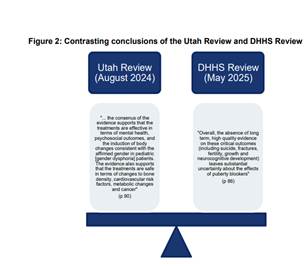
Puberty Blocker Ban: Invited Expert Submission

I was an academic expert invited to submit expert opinion & evidence to the Autumn 2024 closed consultation on the legal and criminal ban on puberty blockers. I’m one of the experts that Wes has claimed to have listened to in agreeing to make this ban permanent.

Here is my submission:

Proposed changes to the availability of puberty blockers

Question 1: Do you agree with making it permanent?

Strongly disagree.

The current policy has had very significant negative impacts and consequences for trans children, adolescents and their families. It is not evidence based and does not centre the rights, health or well-being of the children and adolescents who are directly impacted.

Question 2: Positive impacts

Absolutely zero. It has had devastating consequences for many trans children, adolescents and families.

Question 3: Negative impacts

As an academic and researcher specialising in transgender children’s health and well-being, I need to highlight my grave concerns with the unevidenced and risky decision to criminalise access to puberty blockers. The law has already led to significant severe harms/negative consequences, with significant risks to the young people directly impacted. Three items are important to note 1) Consequences of denial of blockers 2) Higher risk of alternative medical pathways 3) Wider healthcare differentials.

  1. Consequences of denial of blockers

The current criminalisation of puberty blockers has not considered the serious consequences of denial of blockers to trans adolescents who feel endogenous puberty would be intolerable. Recent research has been conducted with UK trans adolescents using and seeking access to puberty blockers, and their families. These articles were not considered by the Cass Review as they were published in 2022 (the Cass Review only looked at literature published pre-2021). At this point the government needs to take stock of all modern evidence, including that published post 2021. This more recent research highlights the reasons for trans adolescents and supportive families seeking access to puberty blockers. This research substantiates the importance of puberty blockers in safeguarding and protecting trans youth happiness, self-esteem, mental health, and in enabling trans youth to stay in school, socialise with their friends, enjoy their adolescence. It also touches on the known harms where trans youth are forced through a puberty they find intolerable, including drop out from school, not wanting to leave their room, disconnecting from friends, not wanting to leave the house, stopping wanting to speak in public, anxiety, depression, self-harm, losing hope, suppressing food intake to prevent pubertal development, no longer wanting to be alive.

There are highly significant risks to the well-being and happiness of trans youth denied access to healthcare interventions such as puberty blockers. Being forced through a puberty that is deeply traumatic, when there is an effective and safe medication to prevent that, is a deeply significant interventions in a young person’s bodily autonomy, necessitating a very high barrier of justification, a justification that is simply not present in the case of puberty blockers. The known harms of forcing trans adolescents through endogenous puberty against their will have not been considered in making the decision to criminalise puberty blockers. Any policy in this area needs to draw upon effective risk assessments of the known dangers of not having access to puberty blockers.

  • Higher risk of alternative medical pathways

When it comes to abortion, it is recognised that criminalisation does not prevent abortion, it merely prevents safe abortion, pushing individuals towards less safe routes to healthcare. There are clear parallels with criminalisation of puberty blockers, with clear evidence already apparent of adolescents and supportive families being pushed to less safe routes to healthcare. The risks of forcing individuals into less safe options have not been considered in making this law.

Many adolescents and families impacted by the current ban feel that being forced through unwanted endogenous puberty is entirely intolerable and inconceivable, and will navigate any other option to ensure that does not happen. Some are looking to flee the country, literally being driven out of their home by a criminal ban on essential healthcare that is more draconian than anywhere else in the democratic world. Some are applying for asylum, due to being persecuted by their government just for being trans. Some are needing to travel abroad every three months in order to access healthcare outside of the UK. This is a significant financial burned on supportive families, and a significant burden and stress on those adolescents who should be able to access healthcare locally, who should be able to spend their weekends having fun with their friends rather than travelling outside of the UK to maintain their right to bodily autonomy and a happy adolescence. Others are likely accessing the Black market, with risks especially related to a lack of blood hormone monitoring and medical oversight. Many are switching from puberty blockers to non-criminalised alternative medication that has a similar impact on preventing puberty, medication that is known to have greater side effects than puberty blockers. In the decision to criminalise puberty blockers, a medication known to be safe, there has been zero consideration of the risks of the alternative medication that youth are now switching to. Other adolescents are going directly to oestrogen or testosterone, at an earlier age than they would have chosen to do if puberty blockers were available. The current criminalisation is having very significant impacts on the healthcare options and pathways that trans youth are accessing. It is not stopping trans youth from accessing affirmative healthcare, merely pushing youth towards options that are less safe.

  • Wider healthcare differentials

A significant impact of criminalisation is a very significant rise in trans children, trans adolescent and supportive family distrust of healthcare providers including GPs. Adolescents and supportive families forced into less ideal paths to healthcare to avoid criminalisation also now have significant reasons to avoid engagement with their local GP. I am deeply concerned about the wider health impacts, both short and long-term, of having a population who are avoiding routine healthcare interactions with their GP and other healthcare providers, related to current criminalisation. This is and will continue to feed into wider healthcare differentials and poorer healthcare outcomes far beyond trans health.

References on puberty blockers (peer reviewed journal articles)

Horton, C. (2022). Experiences of puberty and ‘puberty blockers’ – Insights from trans children, trans adolescents and their parents. Journal of Adolescent Research.

Horton, C. (2022). “I didn’t want him to disappear” Parental decision-making on access to puberty blockers for trans early adolescents. Journal of Early Adolescence.

Question 4: Benefits

It is extremely dangerous and damaging – making it permanent would magnify and entrench the current harms.

Question 5: Risks and risk mitigation

There is no way of mitigating the current risks. It is deeply dangerous and damaging.

Question 6: Impact on protected groups

It is evidently directly discriminatory against those with the protected characteristics of gender reassignment. The same medication, with the exact same purpose (preventing puberty), is considered safe and not criminalised when used by other groups. The argument that it is not discrimination because use for preventing puberty in trans youth has a separate (outdated) psychiatric diagnosis label is not a credible argument. The same medication, the same purpose (preventing puberty), fine for an individual who is not trans, a criminal offense if they are trans. Absolutely direct discrimination.

Looked after children/children in care are being disproportionately negatively impacted by the current criminalisation. The impact of the current criminalisation is being unevenly carried. There are systemic inequalities in which adolescents are being forced to medically de-transition and forced through a endogenous puberty they find intolerable. I am particularly worried about those least able to circumnavigate current criminalisation, especially looked after children. Whilst many other youth with supportive families find some alternative route to avoid being forced through an intolerable puberty, looked after children, even those with supportive carers, are least able to find a route through. The burden of this criminalisation, and its heavy expected negative impacts on trans youth, is falling most heavily on those who are already disadvantaged through being in the care system. Criminalisation is a very blunt instrument for healthcare, and it is particularly blunt in its impact on trans youth in care who desperately need to avoid being forced through an endogenous puberty. There need to be pathways for individualised healthcare, without the law providing a blanket barrier to providing individualised healthcare to each child and adolescent.

Question 7: Additional evidence

As an academic and researcher specialising in transgender children’s health and well-being, I need to highlight my grave concerns with the unevidenced and risky decision to criminalise access to puberty blockers. In addition to the severe harms/negative consequences, and significant risks of criminalising access to puberty blockers outlined above, I will here highlight five serious flaws and miscalculations that have influenced this poor policy, relating to 1) puberty blocker effectiveness 2) safety 3) erosion of child rights and healthcare ethics 4) Pathologisation & mental health led approaches to trans healthcare 5) Government interference in healthcare.

  1. Puberty Blocker Effectiveness.

Puberty blockers are extremely effective at their primary purpose – stopping puberty. Their effectiveness is well studied and not in doubt. Supposed concerns about a lack of evidence of the ‘benefit’ of puberty blockers fail to engage with a critical question. Are they effective at stopping puberty (answer – yes – this is beyond doubt). Trans healthcare scholars and gender service users are very clear that the key purpose of puberty blockers is to prevent endogenous puberty, preventing the progression of unwanted secondary sexual characteristics. Puberty blockers are not expected to resolve ‘gender dysphoria’, where gender dysphoria is a psychiatric diagnosis under the DSM-V that proxies being trans. Puberty blockers are not expected to lead to an improvement in mental health and well-being, they are intended to prevent the catastrophic decline in mental health and well-being that is known to occur when trans youth are forced through a puberty they find intolerable. Discussions on a lack of evidence of puberty blockers resolving gender dysphoria or improving mental health are, at best, a severe misunderstanding of trans youth healthcare. Their purpose is to prevent puberty, and at this they are undoubtably highly effective.

  • Safety

Puberty blockers have been used and studied in different populations for many decades, including use in trans adolescents since 1988. There is no evidence of significant safety concerns when used in trans or non-trans patients. The medication does not work any differently in trans compared to non-trans patients, having the exact same purpose in preventing puberty. There can be different reasons for wanting to prevent puberty (for precocious puberty it is to delay puberty to align with ones peers, for trans adolescents it is for bodily autonomy and preventing progression of a puberty they find intolerable and incompatible with their bodily aspirations, for some cancer treatment it is to remove sex hormones that impact on their cancer). The reasons for stopping puberty are different, but the medication is equally safe. Here the medication is permitted for all uses to prevent puberty in cis (non-trans) people, and is only deemed unsafe for trans people. There is zero evidence that puberty blockers work in a different manner in trans versus cis bodies. There is zero evidence that the same medication, for the same purpose (preventing release of endogenous sex hormones), is somehow safe in cis people an unsafe in trans people. There has been no documented evidence of serious risk in use of this medication, certainly nothing to justify criminalisation.

The known risks of puberty blockers can be monitored and minimised as part of standard endocrine care. Bone health can be monitored, with exogenous sex hormones provided before bone health is compromised, alongside recommendations for exercise and vitamin supplements. There is simply no evidence of any serious safety concern.

The only current suggested harms of puberty blockers for trans youth fall into a category of ‘speculation and pseudoscience’. The Cass Review includes an unevidenced statement speculating that puberty blockers may change the outcome, preventing trans children from shifting into cis identities in adolescence. Trans scholars and healthcare professionals have raised very significant concerns about the Cass, as written in peer reviewed academic publications and scientific commentaries. The Cass Review’s unevidenced speculation on blockers potentially keeping trans children as trans is a gross misunderstanding of existing scholarship on this topic. There is no such evidence that trans children denied puberty blockers become cis youth, or that puberty blockers have any impact on identity. This speculation of a psychological impact of puberty blockers on identity is entirely unsubstantiated, and is in fact directly contradicted by modern evidence that shows trans children frequently grow into trans adults, regardless of healthcare provision or denial. There is zero credible evidence that puberty blockers, a medication used on cis children without any anticipated impact on their gender identity, will have any impact on identity in trans people.

The second speculated ‘risk’ of puberty blockers, is the suggestion that there are ‘unknown’ impacts on brain development. Again, this is entirely unevidenced and speculative. Puberty blockers have been used for many decades, including for trans youth since 1988, with no recorded negative impacts on brain development. Speculation should not be substantiating a highly unusual decision to criminalise a medication. Especially when that speculation is only used to criminalise use of a medication in a highly persecuted minority, while leaving the same medication available to all other populations.

  • Erosion of child rights and healthcare ethics

The current criminalisation of puberty blockers runs in the face of core concepts of child rights, bodily autonomy and healthcare ethics. Decisions on this topic need to bring ethics and healthcare rights into much greater focus. This also needs to consider the reality that puberty blockers are supposedly criminalised apart from for youth under a proposed NHS trial. This trial is not yet designed nevermind launched, with youth being forced to navigate alternative routes to healthcare while waiting for said trial. There are also very significant ethical concerns about the proposed trial, in a UK gender service that has long been critiqued for severe ethical failings. Many many families will not force their child through a service and trial that has significant ethical failings, and currently criminalisation is one tool being used to coerce children into such an unethical trial.

I am also deeply concerned that the proposed criminalisation on puberty blockers is being pushed through without effective and meaningful listening to the adolescents most directly impacted, and their caregivers and Doctors. I am concerned that the latest policy proposal document dismisses the need for further stakeholder consultation, claiming that the Cass Review itself “include(ed) extensive stakeholder engagement with those with ‘lived experience’”. Any engagement with trans communities in the UK will quickly reveal a very widespread belief that Cass Review stakeholder engagement did not meaningfully inform the final report, with community, academic and professional critiques of the Cass process and outcomes extensive, well-documented and growing. Trans communities and trans adolescents have a right to a seat at the table in influencing trans healthcare policy, and this current criminalisation is yet another in a long series of processes where lived experience voices are not being heard or listened to. If the government has any care for trans children and young people, there needs to be a process of committed rebuilding of faith with trans communities, including a commitment to ensuring lived experience specialists are given a seat at the table in informing trans healthcare policy and legislation. 

Current policy documents fail to even recognise the scale of the impact on trans youth. Several documents convey the impression that youth currently accessing puberty blockers are unlikely to be forced to medically de-transition. In reality, the vast majority (over a thousand) trans adolescents currently in receipt of puberty blockers at the point of the introduction of the ban found themselves immediately without any legal route to continue their prescription, and facing an immediate risk of medical de-transition, a forced medical de-transition known to have significant psychological and well-being risks. There has been no estimation of the scale of impacts on trans children who have entered into puberty in the months since the criminal ban, and no estimation on the psychological toll, fear and distress of trans children approaching puberty. The government has taken no effort to understand the experiences and impacts on trans children and adolescents.  

  • Pathologisation & mental health led approaches to trans healthcare

I am also deeply concerned that the proposed policy document references the “importance of ensuring that children and young people impacted by the order can access appropriate support”. Noticeably this does not specify what ‘support’ is effective and appropriate for a child or adolescent who is being forcibly medically detransitioned or who is being coerced through a puberty they find intolerable. This oversight, and the failure to consider what is “appropriate support” in lieu of affirmative healthcare is a fundamental and deep rooted flaw in this whole approach. There is no approach to support for trans adolescents with more evidence of effectiveness than affirmative healthcare, including access to puberty blockers and HRT. The government is criminalising the best currently available healthcare. There is no evidence that alternative medication to treat the symptoms of denial of trans healthcare (including anti anxiety and anti depression medication, or psychotherapy) is effective for trans youth wanting to avoid distressing pubertal changes. I am deeply concerned that the government policy is paying lip service to “support” to those children and adolescents affected by criminalisation, whilst having no evidence-based support to offer.

In managing the ‘risks’ to trans children and adolescents denied affirmative healthcare, the current consultation places significant emphasis on ‘access to mental health services’. There is significant evidence of pathologisation of trans identities in this approach. Trans children and adolescents, when supported and provided access to affirmative healthcare, may not ever need access to mental health services. The assumption that mental health services are needed by trans children and adolescents is worrying, especially when the mental health need to be managed, is the need directly caused by a UK government ban on essential healthcare. The NHS is supposed to have switched from the view of transness as a mental health disorder as categorised in older healthcare standards, through to acknowledgement that trans-ness is not a mental health condition but a natural part of human diversity, as categoried in the World Health Organisation’s ICD-11. The NHS is yet again failing in its supposed commitments to depathologisation of trans identities, proposing mental health led care for trans young people. This is an extremely dangerous and harmful approach.

  • Government interference in healthcare

I am very concerned about political interference in healthcare, especially when targeting a persecuted minority. There needs to be an exceptionally high bar of justification for political interference in healthcare, especially for use of a blunt instrument like a criminal ban on a medication only when used by a minority population. Trans scholars and communities have long flagged the serious injustices, misunderstandings, and structural violence in navigating healthcare services that fail to provide equitable healthcare to trans people. Here, the government has taken a step to criminalise an aspect of healthcare that is strongly supported by many healthcare professional bodies worldwide. Doctors are being prevented from making individualised decisions with their patients. The law is a very crude tool and politicians stepping between Dr and patient need to be very confident that the risk clearly merits this intervention, bearing in mind also the expected risks of criminalisation. In this case the risk of puberty blockers is entirely unsubstantiated, indeed they are deemed safe for every other population group, and are deemed safe enough for an NHS trial. The statement in the equality and impact assessment that this criminalisation does not directly discriminate against people with the protected characteristic of gender reassignment is entirely uncredible. The policy very clearly directly discriminates against use of puberty blockers only when used by trans adolescents. Children using them for the exact same purpose (preventing puberty), are not criminalised, if they are not trans. The risks of criminalisation are already very clear and growing by the day, pushing trans adolescents towards routes that are known to be less safe than puberty blockers. The policy does not stand up to scrutiny as necessary or evidence based. It is not driven by any understanding of trans adolescents nor care for their rights and well-being. It is not informed by engagement with trans healthcare experts. It will certainly go down in history as an example of government persecution of trans communities. Healthcare should be individualised and evidence based, with no room for prejudice. Criminalisation of a medication only when used by trans adolescents is a very clear example of prejudice informed healthcare.  

References

On failings in the Cass Review (peer reviewed journal article)

Horton, C. (2024) The Cass Review:  Cis-supremacy in the UK’s approach to healthcare for trans children. International Journal of Transgender Health

On failings in the Cass Review (commentary)

Horton, C. and Pearce, R. (2024) The U.K.’s Cass Review Badly Fails Trans Children, Scientific American

Pearce, Ruth (2024) What’s wrong with the Cass Review: A round up of commentary and evidence. Blog post.

Horton, Cal (2024). “Social transition, puberty blockers and the Cass Review”, What the Trans Podcast: https://whatthetrans.com/social-transition-puberty-blockers-and-the-cass-review-podcast-transcript/

On ethical failings in trans healthcare services in the UK (peer reviewed journal articles)

Horton, C. (2021) “It felt like they were trying to destabilise us”:  Parent assessment in UK Children’s Gender Services, International Journal of Transgender Health

Horton, C. (2022). “Of Course, I’m Intimidated by Them. They Could Take My Human Rights Away”: Trans Children’s Experiences with UK Gender Clinics. Bulletin of Applied Transgender Studies.

Horton, C. (2022). De-pathologising diversity: Trans children and families’ experiences of pathologisation in the UK. Children and Society.

On the need for child voice and child rights in healthcare research and policy (peer reviewed journal articles)

Horton, C. (2024) The importance of child voice in trans health research: a critical review of research on social transition & well-being in trans children. International Journal of Transgender Health

Horton, C., Pearce, R., Veale, J., Oakes-Monger, T. C., Pang, K. C., Pullen Sansfaçon, A., & Quinney, S. (2024). Child rights in trans healthcare – a call to action. International Journal of Transgender Health, 25(3), 313–320.

On the need for depathologisation of healthcare (peer reviewed journal article)

Horton, C. (2022). De-pathologising diversity: Trans children and families’ experiences of pathologisation in the UK. Children and Society.

Question 8: Data gathering

There is no way to gather meaningful data on those trans children, adolescents and supportive families directly harmed by this law without trust. Currently the UK government hold no such trust amongst impacted communities, who view this current criminalisation as a direct attack on trans children’s rights, lives and well-being. Without trust building, people will continue to be afraid to engage with government or NHS related data collection on this topic. Trust needs to be earned through removal of this harmful attach on trans children and adolescents, through ensuring lived experience experts are given an influential and respected seat at the table in government and NHS policy spheres, and through enacting policy that is actually guided by listening to and ensuring the best interests of trans children and young people.

Question 9: Satisfaction with consultation

Very little faith that this consultation will be listened to, or that the harms to trans children will carry weight in the eyes of those making decisions.

Latest Evidence on Puberty Blockers

In 2020 I summarised the then published research on puberty blockers in a blog. That blog post remains a comprehensive overview of the pre 2020 literature, with relevance to discussions today.

There has been a significant body of research on puberty blockers published since that 2020 blog, that I will summarise and keep updated here. I’ve been meaning to update that blog, 4 years later. I was given encouragement by the latest overstep by the Charity Commission.

Yesterday the UK Charity Commission insisted that UK Charities revise their communication on puberty blockers with due regard for the findings of the Cass Review. This Charity Commission recommendation is problematic for two major reasons. Firstly, the Cass Review was heavily biased, an exemplar of prejudice impacting on healthcare policy, and has been widely condemned by trans communities, by healthcare experts worldwide and by academic researchers. The Charity Commission has no business stepping into this realm of academic criticism, and should not be preventing UK charities from highlighting the areas where the Cass Review deviated, for ideological reasons, from the evidence base. UK charities should not be coerced by the Charity Commission to endorse and disseminate medical advice they know to be deeply flawed. (Ruth Pearce has also done a blog on the Charity Commission’s latest advice to UK charities).

Secondly, regardless of any view on the reliability of the Cass Review, the Cass Review presents a snapshot of scientific evidence review at one point in time. The Cass Review drew upon a systematic review that looked at evidence published before April 2022 (and omitted some evidence published before that). The Cass Review was very clear that the science and evidence base underpinning trans youth healthcare is evolving and growing, and that approaches need to be atuned to new evidence as it is published. Science does not stand still. We need to continue to track and report on new evidence as it becomes available. Charities and others advising and supporting trans youth need to ensure they are representing current literature and current knowledge on puberty blockers, including considering the numerous peer reviewed academic studies published since April 2022.

This blog summarises all the literature published on puberty blockers since my last blog (written in early 2020). Many of the more recent of these articles were not considered by the Cass Review. The Cass Review examined articles published before April 2022 – articles published since that date are starred to highlight the evolving evidence base in this field.  

(note: The April 2022 cut-off date was used variably by the Cass Review. April 2022 was stated as the cut-off date for inclusion of studies in the York systematic literature review – however the Cass Review did include more recent studies that were critical or ambivalent about gender affirmative care, whilst ignoring more recent studies that presented positive findings on gender affirmative care).

On effectiveness

Mejia-Otero et al. (2021) “Effectiveness of Puberty Suppression with Gonadotropin-Releasing Hormone Agonists in Transgender Youth. Found that puberty blockers were effective at blocking puberty, and as effective in trans youth as in cis youth with precocious puberty.

On mental health

*Chen et al. (not yet published). This study was presented at WPATH 2024. It highlighted the different mental health trajectories of trans youth. It emphasised that for trans youth with childhood support, family support, affirmation, low levels of gender minority stress, they have good mental health from childhood, and that good mental health is maintained through puberty blocker and gender affirming hormone treatment. For these youth, puberty blocker treatment would not lead to an improvement in mental health but a retention and protection of that good mental health. This is a very important distinction and highlights that looking for ‘mental health improvements’ is the wrong metric for this cohort. Similarly it highlighted a group with persistent mental health challenges, throughout gender affirming treatment. It concluded that gender affirmative healthcare is an important component of healthcare, but not expected to eradicate mental health challenges, especially for trans youth facing hostility, hate and persecution, and for youth with co-existing challenges linked to elevated rates of mental health. Overall, amongst youth receiving gender affirming healthcare, good mental health was more likely in trans youth with less loneliness, less gender minority stress, higher parental acceptance and higher emotional support.

* Kuper et al. (not yet published). This study was presented at WPATH 2024. It examined the outcomes for trans youth receiving testosterone and oestrogen. It noted that large improvements in body dissatisfaction were seen as the primary goal of treatment. This is an important clarification of a key goal of gender affirming care. It noted modest improvements in mental health and quality of life, which were also impacted by gender minority stress. They noted that this sample is in Texas where there are very significant socio-political stressors and state persecution, which is likely impacting on mental health measures. This study again emphasises that mental health does not operate in a vacuum, and that looking for improvements in mental health may be an unhelpful metric in a context where trans youth face severe and chronic stressors.

 *McGregor et al. (2024) “Association of Pubertal Blockade at Tanner 2/3 With Psychosocial Benefits in Transgender and Gender Diverse Youth at Hormone Readiness Assessment”. It compared 40 trans adolescents receiving blocker at tanner 2 or 3 to 398 trans adolescents who had not accessed a puberty blocker. It found those who accessed a puberty blocker had lower anxiety, less depression, less stress, and were significantly less likely to report any suicidal thoughts.

*Horton (2022) [My article] “Experiences of Puberty and Puberty Blockers: Insights From Trans Children, Trans Adolescents, and Their Parents”. Three major themes are presented, relating to pre-pubertal anxiety; difficulties accessing blockers; and, for a minority who were on blockers, experiences of relief and frustration. It highlighted the increase of anxiety in the years before puberty, and the role of confidence that puberty blockers would be available in assuaging that anxiety. This is one of the only pieces of modern research that actually centres trans children’s voices and perspectives on puberty blockers.

Chen et. al (2021) “Psychosocial Characteristics of Transgender Youth Seeking Gender-Affirming Medical Treatment: Baseline Findings from the TYC Study”. It compared the well-being of 95 trans adolescents just before accessing puberty blockers (mean age 11) to the well-being of 316 trans adolescents just before accessing HRT (mean age 16). A vast majority (93%) of the youth just about to start HRT had not been able to access puberty blockers. This study compared the two groups. Amongst the group about to access puberty blockers 28% showed depression, 22% anxiety, 23% lifetime suicidal ideation and 7.9% a past suicide attempt. Amongst the group about to access HRT group, the vast majority of whom had not been able to access puberty blockers 51% showed depression, 57% anxiety, 66% suicidal ideation and 24% a past suicide attempt. The study may indicate a decline in well-being over adolescence for trans youth who are not able to access affirmative healthcare, pointing to possible benefits of accessing gender-affirming treatment earlier in life. 

*Tordoff et al. (2022) “Mental Health Outcomes in Transgender and Nonbinary Youths Receiving Gender-Affirming Care”. The study looked at 104 trans youths. It found that receipt of gender-affirming care, including puberty blockers and gender-affirming hormones, was associated with 60% lower odds of moderate or severe depression and 73% lower odds of suicidality over a 12-month follow-up. Given this population’s high rates of adverse mental health outcomes, these data suggest that access to pharmacological interventions may be associated with improved mental health among TNB youths over a short period.

Wittlin et al. (2024) “Mental Health during Medical Transition in a US and Canadian Sample of Early Socially Transitioned Transgender Youth“. Looked at anxiety and depressive symptoms among transgender youth at 3 stages: before youth had begun puberty blockers; after they had begun blockers; and after they had begun hormone therapy, comparing them to samples of cis youth. In this sample of transgender youth who sought and received gender-affirming medical care, participants experienced stable and relatively low levels of psychological distress across stages of medical transition and across time. There was one exception: transgender girls showed increased, followed by decreased, parent-reported depressive symptoms over time. In contrast, cisgender girls showed increases in internalizing symptomatology (with the exception of parent-reported anxiety) as they got older, and cisgender boys showed decreased self-reported anxiety and increased, followed by decreased, parent-reported depressive symptoms. By mid-adolescence, levels of anxiety and depressive symptoms among transgender girls and transgender boys generally fell between those of cisgender girls and cisgender boys.

On quality of life & well-being

Fontanari et al. (2020) “Gender Affirmation Is Associated with Transgender and Gender Nonbinary Youth Mental Health Improvement”. Survey of 350 Brazilian trans youth. Having accessed multiple steps of gender affirmation (social, legal, and medical/surgical) was associated with fewer symptoms of depression and less anxiety. Furthermore, engaging in gender affirmation processes helped youth to develop a sense of pride and positivity about their gender identity and a feeling of being socially accepted.

Carmichael et al. (2021) “Short-term outcomes of pubertal suppression in a selected cohort of 12 to 15 year old young people with persistent gender dysphoria in the UK”. Research of 44 trans youth. Overall patient experience of changes on GnRHa treatment was positive. It identified no changes in psychological function. Bone mass density was as expected.

Becker-Helby et al. (2020) “Psychosocial health in adolescents and young adults with gender dysphoria before and after gender-affirming medical interventions: a descriptive study from the Hamburg Gender Identity Service”. Followed 75 German trans youth from baseline through to 2 years later. 21 had no medical interventions. 11 had puberty suppression only. 32 had gender affirming hormones only. 11 had gender affirming hormones and surgery, predominantly mastectomy. At baseline all groups had high anxiety and low quality of life scores. For the puberty suppression group, quality of life measures at follow up after 2 years matched German healthy norms. Clinicians’ ratings of global functioning (CGAS) indicated good functioning levels at follow-up. Rates of anxiety and depression were still elevated.

*Horton (2022) [My article] ““I Didn’t Want Him to Disappear” Parental Decision-Making on Access to Puberty Blockers for Trans Early Adolescents”. This looked at how 30 parents of trans children navigate decisions about puberty blockers, and what factors those parents see as important for their children’s health and well-being. Parents regarded puberty blockers as protective of short and long term mental health. They felt puberty blockers enabled and sustained adolescent well-being and quality of life, enabling trans youth to focus on education, socialising, friendships, enjoying their adolescence. Parents expressed frustration at an excessively onerous process for providing consent, in particular the practice of asking adolescents at the point of accessing puberty blockers to consider the impacts of other medical interventions like HRT and surgery. Parents felt the process of taking consent should acknowledge that taking puberty blockers for a trans adolescent is not a more significant decision than a decision to proceed through endogenous puberty. Parents expressed dismay at the way in which evidence of safety and effectiveness for cis youth was disregarded (the same drugs do not work differently in trans youth). Parents also commented on they fact that they would never engage in a Randomised Control Trial of puberty blockers, highlighting significant practical and ethical flaws.

Impact on bodies and future surgery

Van de Grift et al. (2021) “Timing of Puberty Suppression and Surgical Options for Transgender Youth”. Looked at the impact of puberty blocking medication for trans people who later pursue surgical transition. They found that trans masculine adolescents receiving early puberty blockers were less likely to need chest surgery. Trans feminine adolescents receiving early puberty blockers were more likely to require a different type of bottom surgery to trans feminine adolescents who had not received early puberty blockers.

*Boogers et al. 2023 “Time Course of Body Composition Changes in Transgender Adolescents During Puberty Suppression and Sex Hormone Treatment”. Study compared trans girls on puberty blockers to cis boys and trans boys on puberty blockers to cis girls. Trans girls experienced ongoing lean mass decrease and fat mass increase compared to cis boys during 3 years of PS while in trans boys smaller changes compared to cis girls were observed that stabilized after 1 year.

On body image and body satisfaction

‘Bodily satisfaction’ or ‘appearance congruence’ are recognised as a critical outcome or benefit of access to puberty blockers.

*Chen et al. (2023) “Psychosocial Functioning in Transgender Youth after 2 Years of Hormones”. It monitored the impact of 2 years of HRT on 315 trans adolescents (mean age 16). During the study period, appearance congruence, positive affect, and life satisfaction increased, and depression and anxiety symptoms decreased. Increases in appearance congruence were associated with concurrent increases in positive affect and life satisfaction and decreases in depression and anxiety symptoms. The authors note that two trans youth died by suicide during the study period.

Kuper et al. (2021) “Body Dissatisfaction and Mental Health Outcomes of Youth on Gender-Affirming Hormone Therapy”. This study was not specifically on puberty blockers. But highlights that bodily satisfaction is a key measure that is changed through gender affirming hormones.

Grannis et al. (2021) “Testosterone treatment, internalizing symptoms, and body image dissatisfaction in transgender boys”. This study was not specifically on puberty blockers. It examined the well-being and bodily satisfaction of trans boys who had not received puberty blockers, comparing those who accessed Testosterone to those who had not yet accessed Testosterone. Those who had been through puberty without puberty blockers had high bodily dissatisfaction, anxiety and depression. Those on testosterone had reduced bodily dissatisfaction, with lower depression and suicidality. Group differences on depression and suicidality were directly associated with body image dissatisfaction

Articles on the rates of satisfaction with treatment and rates of continuation of gender affirming healthcare after puberty blockers

*Van der Loos et al. (2022) “Continuation of gender-affirming hormones in transgender people starting puberty suppression in adolescence: a cohort study in the Netherlands”. 720 people were included, of whom 220 (31%) were assigned male at birth and 500 (69%) were assigned female at birth. At the start of GnRHa treatment, the median age was 14·1 (IQR 13·0–16·3) years for people assigned male at birth and 16·0 (14·1–16·9) years for people assigned female at birth. Median age at end of data collection was 20·2 (17·9–24·8) years for people assigned male at birth and 19·2 (17·8–22·0) years for those assigned female at birth. 704 (98%) people who had started gender-affirming medical treatment in adolescence continued to use gender-affirming hormones at follow-up. Age at first visit, year of first visit, age and puberty stage at start of GnRHa treatment, age at start of gender-affirming hormone treatment, year of start of gender-affirming hormone treatment, and gonadectomy were not associated with discontinuing gender-affirming hormones. Most participants who started gender-affirming hormones in adolescence continued this treatment into adulthood. The continuation of treatment is reassuring considering the worries that people who started treatment in adolescence might discontinue gender-affirming treatment.

*Cavve et al. (2024) “Reidentification With Birth-Registered Sex in a Western Australian Pediatric Gender Clinic Cohort”. From those seen at this Australian clinic between 2014 and 2020, 1% of trans adolescents accessing medical treatment including puberty blockers later reidentified with their assigned sex when followed up in 2022.

*Van der Loos et al. (2023) “Children and adolescents in the Amsterdam Cohort of Gender Dysphoria: trends in diagnostic- and treatment trajectories during the first 20 years of the Dutch Protocol”. This Study looked at the pathways of children who received puberty blockers over a 20 year period. Of all 266 AMAB who started GnRHa at our center, 9 (3.4%) discontinued treatment. Six (2.3%) ceased treatment because of abating GD. In 2 AMAB (0.8%), GnRHa treatment ended due to psychological or social issues hindering transition. In 1 individual (0.4%), GnRHa was discontinued due to compliance issues. Of all 616 AFAB, 5 (0.8%) broke off GnRHa. In 3 (0.5%), remission of GD led to discontinuation. In 2 (0.3%), GnRHa was suspended due to compliance issues. Of 707 eligible VUmc participants using GnRHa, 93% subsequently started GAH. The majority of people who had not yet started GAH did so for protocol reasons respectively. They were either too young or had not used GnRHa for the required amount of time.

*Masic et al. (2022) “Trajectories of transgender adolescents referred for endocrine intervention in England”. Not very informative.

*Butler et al. (2022) “Discharge outcome analysis of 1089 transgender young people referred to paediatric endocrine clinics in England 2008–2021”. Looked at pathways of those who had accessed endocrine services. 999/1089 (91.7%) continued identifying as gender variant. 90/1089 ceased identifying as gender variant. 58/1089 (5.3%) stopped treatment either with the gonadotropin releasing hormone analogue (GnRHa) or gender-affirming hormones (GAH) and reverted to their birth gender: <16 years (20/217; 9.2%); ≥16 years (38/872; 4.4%). Subdividing further, 16/217 (7.4%) <16 years ceased GnRHa and 4/217 (1.8%) after GAH. Of those ≥16 years, 33/872 (3.8%) ceased GnRHa and 5/872 (0.6%) GAH. At discharge, 91.7% continued as transgender or gender variant, 86.8% sought ongoing care through NHS GICs. 2.9% ceased identifying as transgender after an initial consultation prior to any endocrine intervention and 5.3% stopped treatment either with GnRHa or GAH, a higher proportion in the <16 year compared with the ≥16 year groups. 

On impact of puberty blockers on future sexual functioning

Van der Meulen et al. (2024) “Timing of puberty suppression in transgender adolescents and sexual functioning after vaginoplasty“. Looked at 37 transfeminine individuals treated with a gonadotropin-releasing hormone agonist (puberty suppression), estrogen, and vaginoplasty (penile inversion technique or intestinal vaginoplasty) in the Netherlands, between 2000 and 2016. Experiences regarding sexual functioning and difficulties were assessed with a self-developed questionnaire ~1.5 years after genital gender-affirming surgery and compared between early (Tanner stage G2-3) and late (Tanner stage G4-5) treatment with puberty suppression. Following surgery, 91% of transfeminine individuals was able to experience sexual desire, 86% experienced arousal, and 78% could attain an orgasm. Seventy-five percent of transfeminine individuals who had not experienced an orgasm pre-surgery were able to experience one post-surgery. Of all participants, 62% reported having tried penile-vaginal intercourse post-surgery. The majority reported the presence of one or multiple sexual challenges. There were no significant differences in postoperative sexual function or sexual difficulties between groups treated with early versus late puberty suppression. This study found that post-vaginoplasty transfeminine individuals after both early and late suppression of puberty have the ability to experience sexual desire and arousal, and to achieve orgasms. Outcomes are comparable to previous findings in those who started treatment in adulthood.

Articles examining how puberty blockers impact on other aspects of health

Strang et al. (2021) “Transgender Youth Executive Functioning: Relationships with Anxiety Symptoms, Autism Spectrum Disorder, and Gender-Affirming Medical Treatment Status”. The study looked at executive functioning in 124 trans youth. 21 % of non-autistic and 69 % of autistic transgender youth had clinically elevated EF problems. Autism, anxiety and depression were all associated with lower executive function. Those on just puberty blockers for a year or less saw no impact on executive function. Being on puberty blockers without HRT for more than a year was slightly associated with low executive function. Being on gender-affirming hormones was associated with better executive function. It noted that experiences of stress, rejection and gender minority stress are likely to negatively impact on executive function.

*Valentine et al. (2022) “Multicenter Analysis of Cardiometabolic-related Diagnoses in Transgender and Gender-Diverse Youth: A PEDSnet Study” The study found that GnRHa were not associated with greater odds of cardiometabolic-related diagnoses.

Perl et al. (2021) “Blood pressure dynamics after pubertal suppression with gonadotropin-releasing hormone analogs followed by estradiol treatment in transgender female adolescents: a pilot study”. This research found that being on puberty blockers for trans feminine adolescents did not impact on blood pressure.

Perl et al. (2021) “Blood Pressure Dynamics After Pubertal Suppression with Gonadotropin-Releasing Hormone Analogs Followed by Testosterone Treatment in Transgender Male Adolescents: A Pilot Study”. This research found that being on puberty blockers for trans masculine adolescents had some impact on blood pressure, with this effect disappearing when on testosterone.

Russel et al. (2020) “A Longitudinal Study of Features Associated with Autism Spectrum in Clinic Referred, Gender Diverse Adolescents Accessing Puberty Suppression Treatment”. The research found that for autistic trans youth, being on puberty blockers did not affect their social responsiveness. (?)

Articles related to bone health

*Van der Loos et al. (2023) “Bone Mineral Density in Transgender Adolescents Treated With Puberty Suppression and Subsequent Gender-Affirming Hormones”. This looked at people average age 28, who had been on affirming hormones for an average of 11-12 years, having started affirming hormones at 16, after previously being on puberty blockers from tanner 2-3. Trans girls had lower bone mass than cis boys before the start of puberty blocker treatment. The study provided evidence that bone mineral accrual is temporarily suspended by the use of puberty suppression but, due to an increase during GAH treatment, BMD catches up with pretreatment levels at long-term follow-up, except for the lumbar spine in individuals assigned male at birth. The study concluded that treatment with a GnRH agonist followed by long-term gender-affirming hormones is safe regarding bone health in transgender persons receiving testosterone, but bone health in transgender persons receiving estrogen requires extra attention and further study.  Estrogen treatment should be optimized and lifestyle counseling provided to maximize bone development in individuals assigned male at birth. [Note this is yet another study inappropriately using Z scores compared to assigned sex which other lit (see earlier blog) has found are not the most useful way of studying bone density for this population]. Whilst this article predominantly compares trans people to the bone density of their assigned sex, when comparing trans people to their affirmed sex it notes “At follow-up, when participants were in their late 20s (around 28 years), the majority had z scores within the normal range when using reference data of the affirmed gender”.

Navabi et al. (2021) “Pubertal Suppression, Bone Mass, and Body Composition in Youth With Gender Dysphoria”. Found that reduced bone density of trans adolescents on puberty blockers was related to insufficient Vitamin D. Found that trans adolescents on puberty blockers need to take vitamin D. (This is standard healthcare). 

*Bachrach et al. (2023) “Bone Health Among Transgender Youth: What Is a Clinician to Do?” provides advice for clinicians on how to advise trans youth and families on managing bone health relating to puberty blockers.  

Articles related to research ethics on puberty blockers

*Ashley et al. (2023) “Randomized-controlled trials are methodologically inappropriate in adolescent transgender healthcare”. Outlines why RCTs are inappropriate, unpractical and unethical for puberty blockers.

*Moscati et al. (2023) “Trans* identity does not limit children’s capacity: Gillick competence applies to decisions concerning access to puberty blockers too!”. Outlines why being trans does not override important medical ethical principles of decision making.  

Articles related to height

Schulmeister et al. (2021) “Growth in transgender/gender-diverse youth in the first year of treatment with gonadotropin-releasing hormone agonists”. It looked at impact on rates of growth in height. It followed 55 trans adolescents who started blockers at average age 11, 62% at tanner 2 and 29% at tanner 3.  Pre-pubertal cis children grow at average 6.1 cm a year (range 4.3 – 6.5). Trans children who started puberty blockers at tanner II grew at a median of 5.3cm a year (range 4.1 – 5.6cm). Trans children who started puberty blockers at tanner III grew a median of 4.4cm a year (range 3.3 – 6.0cm). These rates are slightly lower rates of height growth than pre-pubertal youth. Trans children who started puberty blockers at tanner IV grew a median of 1.6cm a year (range 1.5 – 2.9cm), at a lower rate of height growth than pre-pubertal youth. In summary, trans adolescents on puberty blockers at tanner 2 and 3 continue to grow in height at similar rates to pre-pubertal children. Trans adolescents on puberty blockers at tanner 4 grow in height at slower rates. More information on the timing of affirmative healthcare and impacts on height will be valuable for those who desire a height in ranges typical for cis men and women.

*Boogers et al. (2023) “Transgender Girls Grow Tall: Adult Height Is Unaffected by GnRH Analogue and Estradiol Treatment”. This study looked at how gender affirming healthcare affects the height of trans girls. In the Dutch population, cis men reach a mean adult height of 183.8 cm, which is more than 13 cm taller than cis women (170.7 cm)  This study looked at 161 trans girls who started puberty blockers before age 16 and started oestrogen at an average age of 15 or 16 years old. The cohort were at different tanner stages when starting blockers (Tanner 2 – 5). The mean duration of puberty suppression 2.4 years. Individuals had an average growth velocity of 5.3 cm/year in the first year of treatment. This decreased to 3.5 cm/year in the second year.  When starting oestrogen at 15 or 16 they were either treated with estradiol at a regular dose (2 mg), with high growth-reductive doses of estradiol (6 mg) or with ethinyl estradiol (EE, 100-200 µg).

Growth velocity and bone maturation decreased during GnRHa, but increased during GAHT. Adult height after regular-dose treatment was 180.4 ± 5.6 cm.  Growth velocity in the first year of GAHT was 2.8 cm/year, which decreased to 1.4 cm/year in the second year. From the start of GAHT, height increased by 5.9 cm to an adult height of 180.4cm.

The high dose estradiol group mostly had 1.5 years on regular dose before moving to high dose. Compared to regular-dose treatment, this group reduced adult height by 0.9 cm (179.5cm).

The EE group reduced adult height by 3 cm (177.4cm). High-dose EE resulted in greater reduction of adult height than high-dose estradiol, but this needs to be weighed against possible adverse effects.

Individuals who started affirming hormones at a lower bone age reached an adult height that was 1.6 cm/year lower than those who started hormones at a higher bone age.

Potentially earlier initiation of estradiol in transgender girls (before age 15-16) might result in shorter adult height.

Willemsen et al. (2023) “Just as Tall on Testosterone; a Neutral to Positive Effect on Adult Height of GnRHa and Testosterone in Trans Boys”. This study looked at 146 transgender boys treated with GnRH analogues and testosterone who reached adult height. Adult height was on average 172.0cm. Trans boys who started pubertal suppression at a young bone age were significantly taller. PS and GAHT do not have a negative impact on adult height in transgender boys and might even lead to a slightly taller adult height, especially in those who start at a younger age.

*Ciancia et al. (2023) “Early puberty suppression and gender-affirming hormones do not alter final height in transgender adolescents”. This study found that trans boys and trans girls height aligned with cis peers of their assigned gender rather than affirmed gender, with puberty suppression and gender affirming hormones not impacting on height. This study was for trans boys starting puberty suppression at average age 12, and trans girls starting puberty suppression at average age 13 (I couldn’t see the age of starting affirming hormones as I can’t access the full article).

Science does not stand still. We need to ensure we are up to date with the latest research in this field. Charities and those supporting trans children and young people need to keep informed about the latest evidence, and ensure the most accurate, up to date, and comprehensive evidence is made widely available, for informed decision making.

WPATH 2024: Part Two

On the 3rd full day of WPATH 2024, there was one session that I wanted to write up in slightly more detail, as it is very relevant to those working with or supporting trans children and young people. (My original WPATH 2024 blog is available here). The session was titled “New long-term research on adolescent gender-affirming medical care”, with 5 presenters, three from the US, and two from the Netherlands.

I wanted to share my notes on these presentations here. First a big caveat – my notes and interpretation may not be 100% correct, I have not confirmed this post with the presenters of these studies, and these studies have not yet been finalised, peer reviewed or published. Therefore, the data in this study may change before acceptance into the formal literature. At WPATH, within the trans room, there was a discussion on the challenges of knowledge that is of vital importance to trans communities and families of trans kids being paywalled behind expensive and hard to attend conferences. Recognising the very slow timelines of academic publishing, there was a discussion on a duty to share early preliminary results not only with the clinicians and researchers who are able to attend WPATH, but also with the very interested and directly affected trans and family of trans kids communities, currently trying to defend our healthcare from attack, for whom new research is most important. In the trans room at WPATH we talked about our responsibility and duty of care as trans researchers with half a foot in clinical spaces to share information with those who cannot access. As part of this commitment I’m writing this blog.  

First Dr Diane Chen (she/her) presented on trajectories for mental health in the four years following gender affirming hormone initiation. She highlighted the six existing studies that examine psycho-social outcomes in US-based trans youth receiving oestrogen or testosterone (Allen; Achille; Kuper; Tordoff; Chelliah; Chen). These studies have generally found that aspects of mental health improve following initiation of gender affirming hormones. These studies have limitations including that they only follow youth for average of one year after treatment initiation, that they only focus on (internalising) areas like anxiety or depression, and the one article (by the presenter Chen et al) that looked at individual trajectories found significant individual variation around the average change in outcomes. For that study the presenter showed graphs showing, on average, a steep improvement in appearance congruence, a shallow reduction in depression and anxiety, and a shallow improvement in positive-affect and life satisfaction over 2 years. The individual dots show significant variability, suggesting a focus on the average experience may hide difference trajectories between sub-groups. The new study being presented here aims to look at potential distinct trajectories between sub-groups.

The new study (by Chen et al, not yet published), looked at data for 217 youth, average age 16 (range 11-20), 60% trans-masc, 34% trans-femme, 4% non-binary, 80% socially transitioned at baseline, 7.6% received gender affirming care in early puberty (defined as puberty blockers at tanner 2 or 3 or HRT at tanner 3). The study looked at internalising data on (anxiety/depression), at externalising (aggression, risk taking), experiences of gender minority stress, and parental acceptance. Data were collected at baseline, year 1, year 2, year 3 and year 4 [They applied latent growth curve modelling / growth mixture modelling for statistical analysis]. They presented graphs distinguishing three sub-groups that follow distinct pathways across the 4 years. 25% of trans youth in their study were identified as a ‘consistently low’ group who had low levels of anxiety/depression/risk-taking behaviours at baseline who continued to have low levels of anxiety/depression/risk-taking behaviours. 56% were classified as having ‘declining’ levels of anxiety/depression and consistently low levels of risk-taking behaviours, with levels of anxiety and depression slightly above a clinical diagnosis at baseline, later declining to slightly below clinical thresholds. 18% were categorised as elevated, having persistently high levels of anxiety/depression/risk-taking behaviours at baseline and later in study.

From further data analysis they discovered:

95% of youth who accessed early affirmative care were in the categories of consistently low (53%) and ‘declining’ levels of mental health problems, with only 5% of these youth in the category of having persistently high levels of anxiety/depression/risk-taking behaviours.

[Talking about ‘low’ and ‘declining’ as positive descriptors in a study on mental health at times feels a little counter intuitive, given we think of high mental health, or improving mental health as a good thing, whereas here we want to see low and declining mental health problems).

The youth who had consistently good mental health, or improving mental health had the following characteristics in common:

Less loneliness

Less gender minority stress

Higher parental acceptance

Higher emotional support

The study highlights that provision of HRT is not a magic cure to the mental health challenges of trans youth who are isolated, unsupported and facing anti-trans hostility and gender minority stress inside and outside of their homes.

Among youth with high levels of anxiety/depression/risk-taking behaviours at baseline, those with higher levels of baseline parental support were more likely to see improvements in their mental health.

Protection from gender minority stress, reduced isolation, emotional and social support, and parental support are all protective factors for trans youth mental health.

18% of the sample continued to have high levels of anxiety/depression/risk-taking behaviours throughout the study and this portion of trans youth would benefit from more targeted mental health support as well as support to reduce gender minority stress and isolation.

Next Dr Laura Kuper (they/them) presented preliminary findings of 5 – 8 year outcomes of the trans youth longitudinal survey. The study began in 2014 including annual youth and parent report surveys. It looked at quality of life, anxiety, depression, body dissatisfaction. Recently added new measures of gender dysphoria, socio-political stress and decision regret scale.

Wider study now includes 738 youth. At baseline ages 6-18 (mean 15), 64% assigned female at birth, 34% assigned male at birth. A few youth are now in year 9 of the study, most are currently in years 2-7 of the study (new enrolments to the study are being added each year).

Presented data on 267 youth and 317 parents who completed survey on access to treatment. The study looked at those who had started and at some point stopped treatment with oestrogen or testosterone. [For this presentation exact numbers were not provided and the graphs were hard to read precisely so there is a likely margin of error in the percentages I’ve given below – you’ll need to wait for publication of the proper research for the accurate numbers]

10% of those who had ever started oestrogen had at some point stopped oestrogen. The reasons for stopping oestrogen were examined. 1 was because was satisfied with the changes and didn’t need further oestrogen; 2 experienced unwanted changes; 2 had a change in their experience or understanding of gender; 2 stopped due to difficulties accessing oestrogen; 1 for other reasons. Just under half who ever stopped taking oestrogen ended up re-starting taking oestrogen. Youth and parents were asked the question re starting taking oestrogen “It was the right decision”. Around 70% of youth strongly agreed, 5% agreed, 2% neither agreed nor disagreed, 2% strongly disagreed. 60% of parents strongly agreed, 20% agreed, 2% neither agreed nor disagreed, 2% strongly disagreed. Youth and parents were asked the question re starting taking oestrogen “I regret the choice that was made”, and “the choice did me/my child a lot of harm” with the same findings (vast majority strongly disagreed, with only around 2% strongly agreeing).

32% of those who had ever started testosterone had at some point stopped testosterone, significantly higher than the portion who ever stopped oestrogen. The reasons for stopping testosterone were examined. 16 were because were satisfied with the changes and didn’t need further testosterone; 8 experienced unwanted changes; 8 had a change in their experience or understanding of gender; 2 had legal barriers to access; 23 (the largest portion) stopped due to difficulties accessing testosterone; 19 for other reasons. Just under half who ever stopped taking testosterone ended up re-starting taking testosterone, with several going through multiple points of stopping and re-starting. Youth and parents were asked the question re starting taking testosterone “It was the right decision”. Around 154 of youth strongly agreed, 8 agreed, 2 neither agreed nor disagreed, 1 (hard to read graph) disagreed, 1 (hard to read graph) strongly disagreed. 145 parents strongly agreed, 32 agreed, 7 neither agreed nor disagreed, 2 disagreed, 3 or 4 (hard to read graph) strongly disagreed. Youth and parents were asked the question re starting taking testosterone “I regret the choice that was made”, and “the choice did me/my child a lot of harm” with the same findings (vast majority strongly disagreed, with only around 1% strongly agreeing).

Dr Kuper then moved on to present findings on a 5 year longitudinal study of trans youth receiving oestrogen or testosterone. The study currently includes data for 558 youth at baseline, 431 at year one follow up, 275 at year two follow up, 163 at year three, 115 at year 4, 59 at year 5. The declining numbers at later years of follow up is because new youth keep being recruited into the study (not linked to drop out). [They applied linear mixed effect modelling to the dataset for statistical analysis].

Graphs were presented showing a significant and steady decrease in body dissatisfaction over 5 years time for both those on oestrogen and those on testosterone (with the same pattern for both). A graph of depressive symptoms showed a steady decrease in depression scores over the 5 years. The slope and change in depression was similar for both those on oestrogen and those on testosterone, but with those on testosterone having slightly higher depression at baseline and at current measure than those on oestrogen. Both groups were over the point for mild depression and near the level for moderate depression at baseline, and fell to at or just over the point for mild depression at current measure. Graphs showed some improvements in anxiety over time. Quality of life scores improved steadily over time for both groups.

Overall conclusions were:

Strong satisfaction with decision to receive treatment from youth and parents

Large improvements in body dissatisfaction, seen as the primary goal of treatment

Modest improvements in mental health and quality of life, which were also impacted by gender minority stress. They noted that this sample is in Texas where there are very significant socio-political stressors and state persecution, which is likely impacting on mental health measures.

This research also underscores the unsuitability of having mental health improvements as a key justifier for gender affirmative healthcare – especially for those youth who (through social support) have low levels of mental health at the start of puberty. Those youth do not see improvements in mental health, they see their good levels of mental health retained through medical transition. Reviews like the Cass review critiqued affirmative healthcare for not showing puberty blockers not having a significant enough boost to mental health – this is clearly the wrong variable to be tracking.   

Next Dr Kristina Olson presented on trans youth satisfaction with care. She presented existing knowledge on youth satisfaction with care, including the high levels of continuity of care, with the assumption that trans youth would not continue to take active efforts to continue healthcare that they did not want to continue. Also low rates of detransition to live as cis amongst trans youth who commence gender affirming healthcare. We also know there are cases of detransition / dissatisfaction, whilst noting that these two concepts are different and distinct.

This new study aimed to assess levels of satisfaction and regret following puberty blockers and HRT, and to assess continuity of care. Looked at trans youth project, more than 300 socially transitioned binary trans youth recruited between ages of 3 and 12 in years 2013-2017. Mostly US trans youth with some Canadians. Youth followed up every 1-2 years. Study has now been ongoing for 7 – 11 years. Youth have answered questions on average 3.8 times, and parents have answered questions on average 5.8 times. This study presents data from 2023 questionnaires, given to all youth who are currently 12+ and to one parent.

On average the cohort had socially transitioned at 6-7 years old. On average they had started blockers 5 years before the survey, at 11 years old. On average they had begun HRT 3.5 years before the survey, at 13 years old. This cohort, supported in childhood, has had good levels of mental health throughout childhood and into adolescence, with slightly elevated anxiety, matching well-being of cisgender peers.

269 were aged 12+ and had started gender affirming medical care and were eligible for this survey. 220 or 82% completed the survey. For the 18% who did not fill in this specific survey, the research team do have continuity of care medical records. Where data is provided by a youth and their parent, the data tables only show the youth report. Where youth data is not available, the parent reported data is provided.

215 reported on their experience with puberty blockers (160 direct from youth and 55 from parental report). Satisfaction was rated from 1 not at all happy to 7 extremely happy. Satisfaction was rated 6.4 average for youth and 6.7 average from parents. Regret was rated from 1 no regret to 7 strong regret. Regret was 1.5 for youth and 1.3 for parents.

170 reported on their experience with oestrogen or testosteone (119 direct from youth and 51 from parental report). Satisfaction was rated 6.5 average for youth and 6.9 average from parents. Regret was 1.4 for youth and 1.0 for parents.

Very high levels of satisfaction and very low levels of regret

Also asked participants if they would have preferred to receive healthcare treatment at a different time, with options: ‘wish earlier’, ‘correct age’, ‘wish later’, ‘wish never’. 2% of youth wished never to have received puberty blockers, 2% wished to have never received hormones, 1 parent in the sample wished never to have received puberty blockers. 18% of youth (4% parents) wished they had received puberty blockers earlier and 74% youth (86% parents) felt they had received them at the right time (in a sample receiving puberty blockers at average age 11). 34% of youth (19% parents) wished they had received oestrogen or testosterone earlier and 53% youth (75% parents) felt they had received them at the right time (in a sample starting oestrogen or testosterone at average age 13 years old.

From the overall sample, 97% have continued to access gender affirming medical care to this day. 2% have stopped accessing gender affirming medical care.

Overall – very high levels of satisfaction, very low rates of regret,

Only 9 individuals out of 220 sample (4%) experienced regret. 8 (3.6%) experienced regret for blockers, 3 (1%) experienced regret for hormones. From these 9 2 individuals (1%) expressed regret for both blockers and hormones. 4 of the nine stopped all treatment, 1 in the process of stopping treatment, 4 have continued to take blockers or hormones. From the nine expressing regret, about half regret ever starting treatment, about half regret a specific side effect or complication or regret not skipping straight to hormones without time on just blocker.

A majority of youth continue to express high satisfaction with care many years later. This cohort seems to align closely with their cisgender peers on mental health, well-being, and on rates of change of gender identity. Important to note that the access to gender affirming medical care that has accompanied this cohort, is harder to access today for their younger peers, with increasing barriers to trans healthcare across and beyond the USA.

Next Dr Marijn Arnoldussen from the Netherlands. The presentation was titled “gender related and psychological outcomes in adulthood after early gender related medical transition in adolescence”. Studies from the Netherlands tend be of interest, because they were an early supporter of a limited form of gender affirming care, with puberty blockers prescribed to a 13 year old trans boy starting in 1988, and with decades of follow up studies. Studies from the Netherlands also come with some significant baggage, in a highly controlled and potentially pathologizing and psychologically invasive model of care, where folks were expected to conform to a very defined stereotype of trans-ness to receive care. The narrowness of the model of expected transness has relevance to some of their outcomes. Knowing the UK children’s GIDS model sought to replicate the Dutch model, and knowing very closely just how abusive, invasive and harmful the UK approach to trans children has been, makes me approach data from the Dutch clinic with a significant degree of concern, especially where clinicians report data without asking centring the views of their patients, or where clinical control, coercion and pathologisation is apparent.

 The study aim was to describe long term gender outcomes, treatment regret, reflections on gender related medical care, and psychological outcomes for trans adults who received gender affirming medical care, including puberty blockers, during adolescence. The study focused on trans adults who took puberty blockers during adolescence and who started gender affirming hormones over 9 years ago. 145 service users were eligible, of whom 72 participated. This is clearly a pretty high drop out rate. In the UK service, high drop out rates are sometimes an indication of service users not having confidence in clinical research.

From the 72 participants, 51 (71%) were transgender men, 20 (28%) were transgender women. 1 (1%) non-binary. The binary focus of the cohort is perhaps unsurprising if, as was certainly the case in UK children’s clinics, non-binary transitions were not supported or permitted. Interesting that this  cohort who started medical transition in adolescence a decade ago, has significantly more trans men than trans women – when this phenomenon is noted in current youth it is blamed on tiktok which clearly did not exist a decade ago. This cohort started puberty blockers at an average age of 14.85 (range 11.47-17.97) and hormones at an average of 16.67 (range 13.93-18.46) and are followed up at average age 29.1 (range 25-36.29 year old). The oldest in this cohort are 36 years old. Hardly new treatment.  

94.4% had not experienced any change in their gender identity over time from starting blockers at  average age 14 to now being on average 29 years old.

83% (60 people) had not experienced any regret or doubt about their gender affirming medical.

17% (12 people) had experienced some form of doubt or regret – however:

For 2 people (3%) this was occasional thoughts what their life would be like if they hadn’t had medical transition, doubts rather than regrets.

3 people (4%) regretted the chosen surgical technique in genital surgery

4 people (5.6%) regretted either genital surgery or surgery to remove reproductive organs. This figure in particular need to be considered against two important realities – one, stating a desire for ‘full’ transition was in many places considered a key eligibility criteria for any form of medical transition, closing down possibilities for a less binary transition pathway, and two in the Netherlands until very recently surgical transition was deemed necessary for eligibility to change your legal gender and to access various state protections or rights as a trans person. I would assume that where there is pressure to engage in surgical transition, incidents of regret is arguably more likely.

2 people (2.8%) regretted becoming infertile and being unable to preserve sex cells

1 person regretted the hormones and surgery they received.

From the 72 patients followed into average age 29, only one stated a regret of hormones.

The cohort were asked about their ability to make decisions in adolescence. A significant majority, 50 people (69.4%) felt they were capable to make decisions at an even younger age then they were permitted to do under the Dutch model (where they received blockers at average age 14 and hormones at average age 16). 17 people (23.6%) felt they were at the right age for their decisions. 5 people (6.9%) felt they were too young, with these people particularly mentioning the impact on their fertility.

Overall, 98.6% of people were satisfied with their social and medical transition overall. 15% had some doubts or regrets, with this particularly related to aspects of surgical transition. 1 person regretted hormones and surgery. 93% felt, on reflection, they were capable to take decisions on medical transition during adolescence.

Finally in this session there was a presentation from Dr van der Meulen from the Netherlands entitled “sexual dysfunction after early endocrine treatment: long-term study in transgender adults”.

This session had elements of exoticisation and pathologisation of trans people that I found uncomfortable. I’ll share some of the results here. A study on 70 trans adults, comparing those who medically transitioned in early puberty (tanner 2 or 3) with those who medically transitioned in later puberty (tanner 4+). They were average age 29 during this research. For the 50 trans masculine participants, 18% medically transitioned in early puberty, for the 20 trans feminine participants 40% transitioned in early puberty.  

Amongst the groups of adult participants (average age 29), they were asked about experiences of sexual disfunction. For trans men 18% reported a problem with low sexual desire (80% reported no problem with sexual desire), and low sexual desire was reported for 22% of those who transitioned in early puberty compared to 17% for those who transitioned in late puberty. 16% of trans men reported too much sexual desire (64% reported no problem with too much sexual desire) and too much sexual desire was reported for 11% of those who transitioned in early puberty compared to 17% for those who transitioned in late puberty. 4% of trans men reported low sexual arousal (96% reported no problem with sexual arousal) and low sexual arousal was reported for 11% of those who transitioned in early puberty compared to 2% for those who transitioned in late puberty.; 24% reported difficulty orgasm (74% reported no problem orgasm) and difficulty to orgasm was reported for 33% of those who transitioned in early puberty compared to 22% for those who transitioned in late puberty.

For trans women 20% reported a problem with low sexual desire (60% reported no problem with sexual desire), and low sexual desire was reported for 38% of those who transitioned in early puberty compared to 33% for those who transitioned in late puberty. 0% of trans women reported too much sexual desire (100% reported no problem with too much sexual desire). 20% of trans women reported a problem with low sexual arousal (65% reported no problem with sexual arousal) and low sexual arousal was reported for 0% of those who transitioned in early puberty compared to 33% for those who transitioned in late puberty.; 35% reported difficulty orgasm (65% reported no problem orgasm) and difficulty to orgasm was reported for 0% of those who transitioned in early puberty compared to 58% for those who transitioned in late puberty.

Overall sexual disfunction was relatively low amongst these trans adults who medically transitioned in adolescence. There was no significant difference in sexual disfunction between those who medically transition in early puberty compared to those who sexually transition in late puberty. [Research on this topic surely, SURELY needs to better centre the voices and priorities of trans adults, and the multiple factors beyond early or late medical transition that likely impact on experiences – and surely some comparison to cis people’s experiences of sexual disfunction would make such research somewhat less exoticising and othering…]

A few follow up questions were held. One questioner stressed the importance of timeliness of publication of all the above new data – especially in contexts where healthcare is under attack. Another questioner asked about the mental health of neurodivergent populations, asking if datasets could be considered to see where autistic youth fitted on the mental health trajectories, noting the greater mental health challenges and [Is there a term like gender minority stress that applies to the stresses of navigating a neurotypical world?] that are carried by autistic youth that will not be ameliorated by gender affirmative care. There was also some discussion on what outcome indicators are best to track to monitor the impacts of gender affirmative healthcare, with panelists commenting that a narrow focus on mental health is probably not the right indicator.

I didn’t share any of my own research this time at WPATH, but given the WPATH content was very significantly dominated by US and Dutch research, I’ll end by sharing my contributions to the literature on puberty blockers here:

“I Didn’t Want Him to Disappear” Parental Decision-Making on Access to Puberty Blockers for Trans Early Adolescents – available here.

Experiences of puberty and puberty blockers: Insights from trans children, trans adolescents, and their parents – available here.

Gender Dysphoria and puberty blockers

In trans children’s healthcare there is so much intentionally bad science, so much science that fundamentally misunderstands (or chooses to misrepresent) trans experiences.

The quantity of bad science overwhelms – we challenge some, whilst other pieces of bad science slip through undetected.

I just this morning had my attention drawn to some fundamentally bad science (I read about it on the website transfemscience https://transfemscience.org/articles/puberty-blockers/ ) and realised that yet another bad faith move had somehow escaped my attention.

The Cass Review makes the claim that puberty blockers don’t reduce ‘Gender Dysphoria’. In recent discussions on this topic I have argued that this is likely both true and irrelevant. Puberty blockers shouldn’t be expected to reduce gender dysphoria, they don’t magically make trans kids feel better about their primary sexual characteristics. Instead they prevent the increase in gender dysphoria that can occur at puberty, if adolescents denied blockers are forced through the distressing development of unwanted secondary sexual characteristics. I have argued, including in recent media interviews, that puberty blockers shouldn’t be expected to reduce dysphoria, instead they prevent an increase in dysphoria at puberty.

HOWEVER. The term gender dysphoria has multiple meanings. One meaning refers to ‘physical gender dysphoria’, how we feel about our bodies, and particularly how we feel about the parts of our bodies that are impacted by sex hormones. A second meaning refers to ‘social gender dysphoria’, relating to our experiences navigating the world, including how we feel when we are mis-seen and misgendered. A third meaning references the diagnosis of ‘gender dysphoria’ from the Diagnostic and Statistical Manual of Mental Disorders, which has distinct definitions for children or for adolescents and adults, which operates as a proxy for a medical diagnosis of being trans.

In healthcare research a research question that is arguably valid and good faith is ‘does affirmative healthcare reduce physical and social gender dysphoria’. Asking this question about puberty blockers alone would be mis-placed (an error I thought the Cass Review was making) because puberty blockers don’t reduce physical and social dysphoria, they prevent it from getting worse.

However, this isn’t what they are talking about at all,

Let’s take a 2021 UK GIDS (NHS children’s gender clinic) research article on puberty blockers as an example (GIDS research has tended to be so filled with flaws, methodological, analytical, ethical and interpretive, that it is exhausting to read or critique, which is one reason the flaw highlighted in this blog has escaped me until today).

The 2021 article is titled: Short-term outcomes of pubertal suppression in a selected cohort of 12 to 15 year old young people with persistent gender dysphoria in the UK

The article talks about the purpose of blockers “used from early/middle puberty with the aim of delaying irreversible and unwanted pubertal body changes”. So we are talking about physical and social gender dysphoria, right? I’m pretty sure we’re not talking about identity…

The paper talks about measuring the intensity of Gender dysphoria. “The Utrecht Gender Dysphoria Scale (UGDS) is a self-report measure used to assess the intensity of GD validated for age 12+”. This is the only information on gender dysphoria provided in the article. If you don’t already know the Utrecht scale, you are left in the dark on what is being meant and measured here.

The article concludes that “Gender dysphoria changed little across the study”. Again, a finding that intuitively sounds predictable for physical and social gender dysphoria. I would expect them to remain the same (rather than worsen) if accessing puberty blockers. The idea we are talking about physical dysphoria appears to be reinforced by the next sentence “This is consistent with some previous reports and was anticipated, given that GnRHa does not change the body in the desired direction, but only temporarily prevents further masculinization or feminization”.

The article is not clear what is meant by gender dysphoria, and it includes several references to puberty blockers preventing secondary sex characteristics, so I do not blame past me for assuming we were talking about physical gender dysphoria.

BUT – then I went and looked at the measurement tool being used. The Utrecht gender dysphoria scale.

This is a simplified version of the Utrecht scale. It shows the measures that puberty blockers are being criticised for failing to improve:

1. I prefer to behave like my affirmed gender.
2. Every time someone treats me like my assigned sex I feel hurt.
3. It feels good to live as my affirmed gender.
4. I always want to be treated like my affirmed gender.
5. A life in my affirmed gender is more attractive for me than a life in my assigned sex.
6. I feel unhappy when I have to behave like my assigned sex.
7. It is uncomfortable to be sexual in my assigned sex.
8. Puberty felt like a betrayal.
9. Physical sexual development was stressful.
10. I wish I had been born as my affirmed gender.
11. The bodily functions of my assigned sex are distressing for me (i.e. erection, menstruation).
12. My life would be meaningless if I would have to live as my assigned sex.
13. I feel hopeless if I have to stay in my assigned sex.
14. I feel unhappy when someone misgenders me.
15. I feel unhappy because I have the physical characteristics of my assigned sex.
16. I hate my birth assigned sex.
17. I feel uncomfortable behaving like my assigned sex.
18. It would be better not to live, than to live as my assigned sex.

(The original, longer, and more misgendering version of the Utrecht is available here (trigger warning for a really outdated and offensive measurement tool). I would guess GIDS likely used the more offensive and outdated original version. I’ve put the simplified and more modern version above so readers don’t have to get the severe ick that comes from reading the original versions)

They are criticising puberty blockers for failing to show improvements across these 18 questions.

They are criticising puberty blockers for failing to cure transness.

How can we fight this level of bad science at every turn?

Why can’t they even be honest and clear? They could say ‘we expect healthcare to change young people’s answers to the above 18 questions. We consider it a shortcoming of puberty blockers that they do not lead to improved answers to the above 18 questions. We were hoping that puberty blockers would make people not trans. Without evidence of blockers making people not trans, we will not give them to trans youth. Our goal for trans healthcare is to make young people not trans’.

At least be honest about your anti-trans intentions, don’t hide it behind a measurement scale that only gender clinic measurement geeks will understand. Don’t hide beneath a term like gender dysphoria that has multiple meanings.

When stakeholders talk about the goal of NHS services being to ‘reduce gender dysphoria’, if they use the Utrecht scale, they mean, to make people not trans. When they say ‘to reduce gendered distress’ they mean make young people not trans.

When they measure gender dysphoria against the Utrecht scale, they are seeking to cure or reduce transness.

Puberty blockers are ineffective in making people not trans (reducing gender dysphoria according to the Utrecht scale). So, we need ‘talk therapy’, to make people not trans.

 It is conversion therapy all the way through. The conversion therapy is hidden in language of ‘gender dysphoria’ (a term that is used very differently in trans communities’). They know the term gender dysphoria has multiple meanings. It provides a perfect cover for conversive practices.

We need to reduce gender dysphoria they say.

We need to make children not trans they mean.

The level of bad faith, bad science and establishment transphobia is overwhelming. No amount of evidence that affirmative healthcare leads to reduced physical and social dysphoria will ever be enough – because this is not the measure they care about.

They just care about making trans kids into cis kids

This is all they ever care about.

Transphobia and transphobic bad science continues to enable harmful clinical policy and practice.